

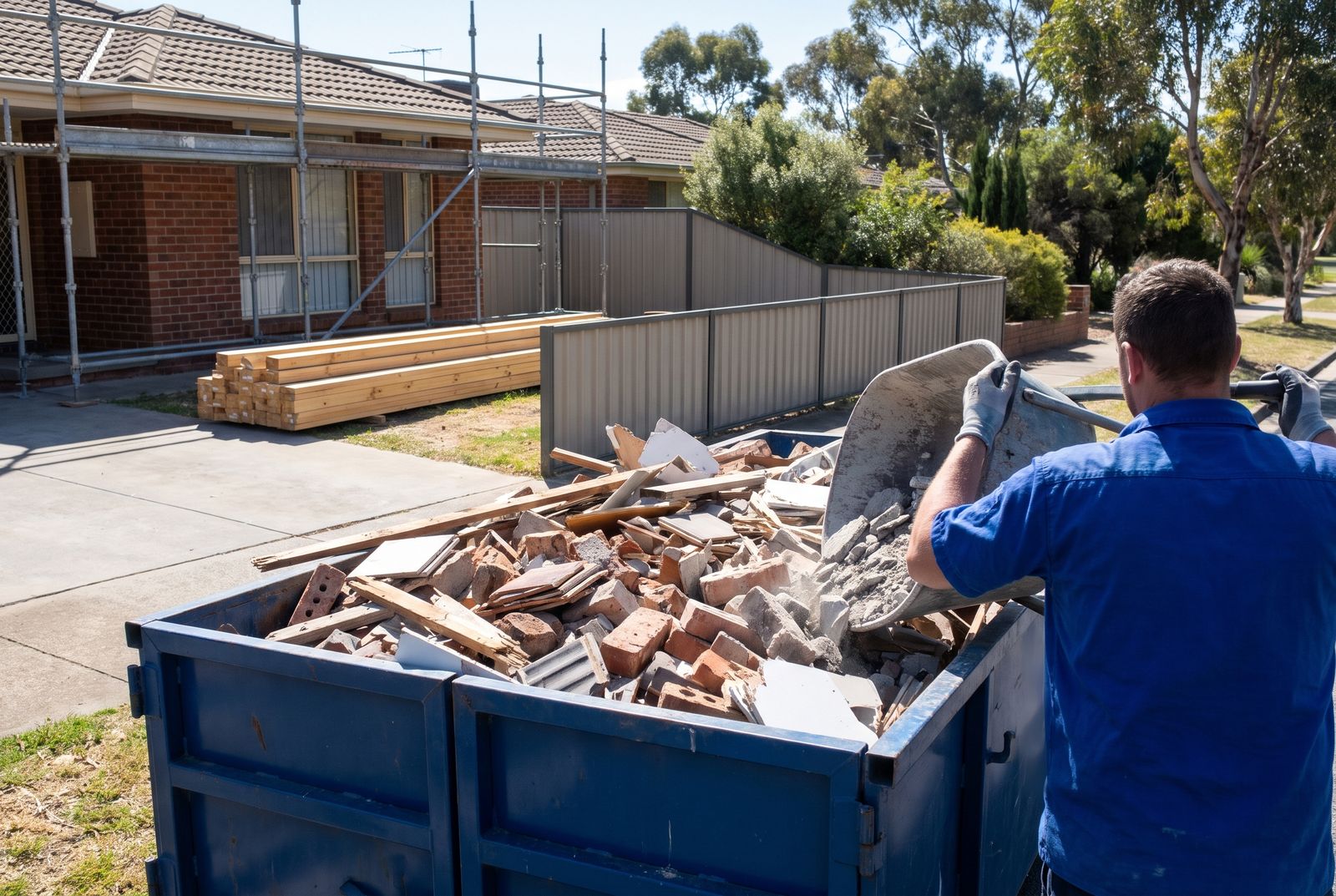
Builders waste removal
Building waste to go? A local rubbish specialist gets back to you within the hour.
Tell us what needs to go and where you are. One local builders waste removal business gets in touch.
- Licence checked and insured
- Verified by Take My Clutter
- Matched with a builders waste removal specialist
4.8
Collective Google Rating
From 500+ reviews
Who gets your job
Checked before they get your job
A local business gets back to you within the hour.
We check each business's licence before it gets jobs.
Every business we pass jobs to is insured.
Only verified businesses get your job.
What you get
What builders waste removal typically covers
Every business works its own way, so confirm what is covered when they call. This is what most businesses list when a crew loads and takes away renovation and building waste.
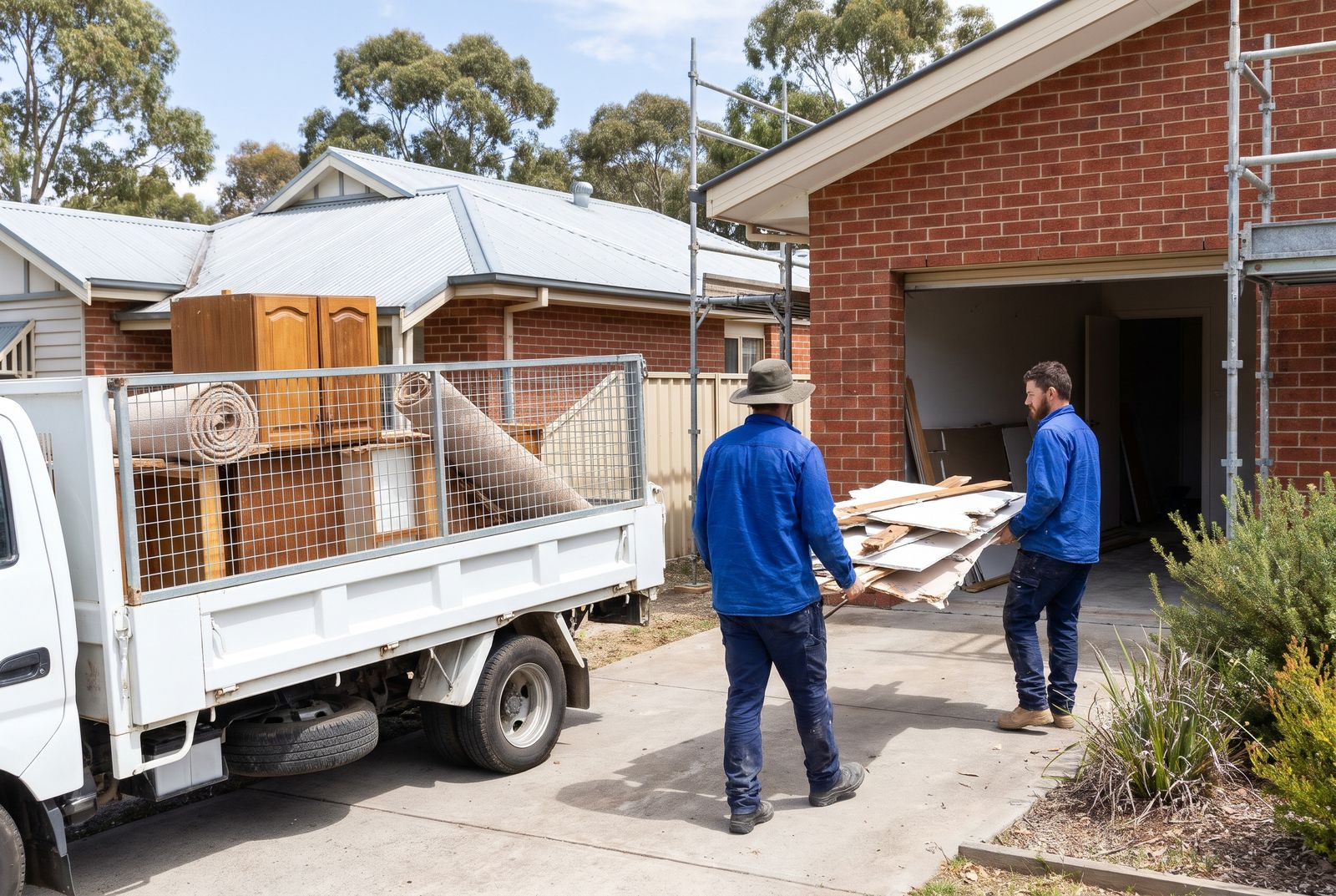
Loading and taking away
- Waste carried out from the house, yard or site
- Everything loaded onto the truck by hand
- Usually taken away in one visit where it fits
- Tip fees usually part of the quote
- The area often swept before they leave
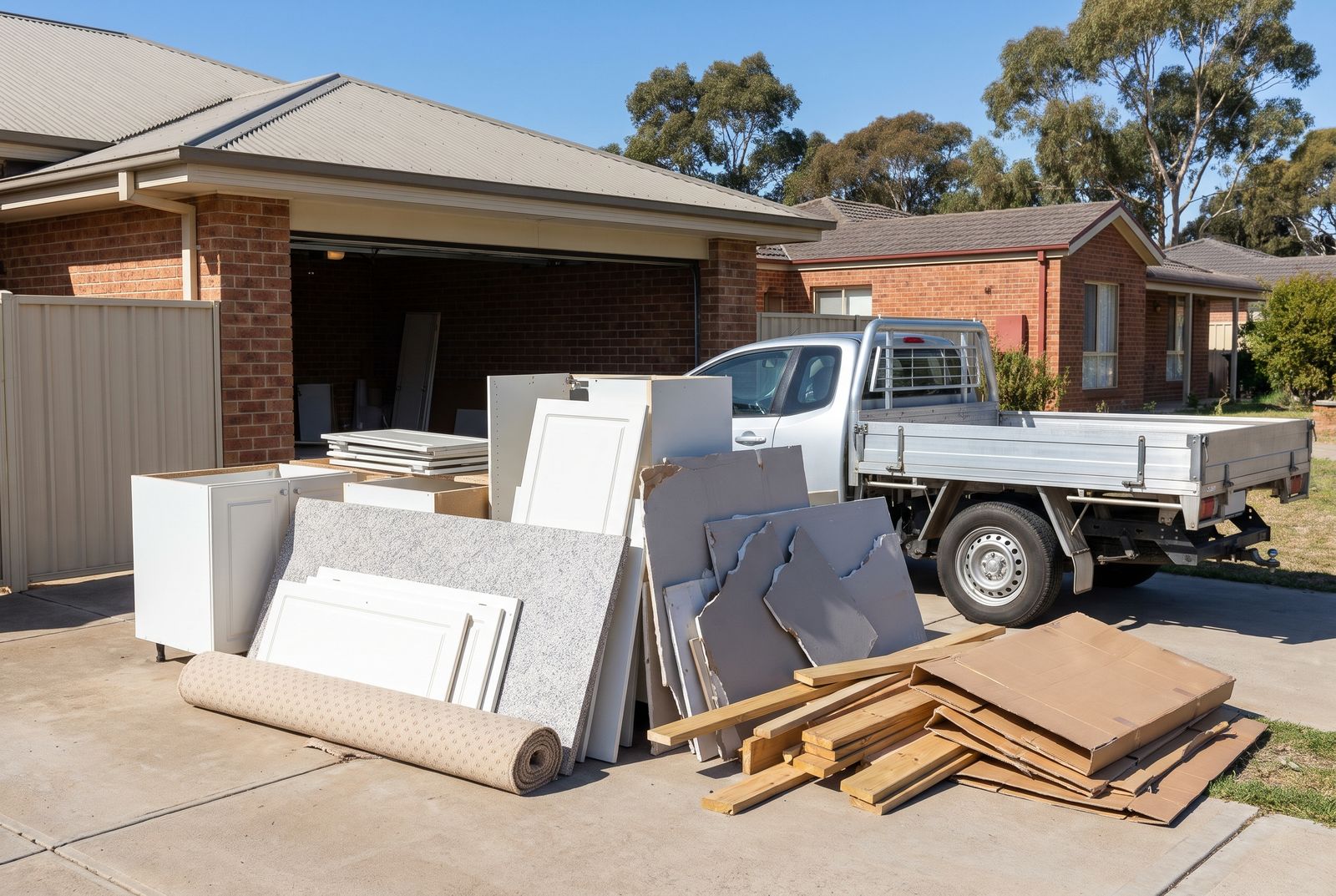
Old kitchens, bathrooms and floors
- Cabinets, benchtops and shelving
- Vanities, baths, basins and toilets
- Wall and floor tiles
- Plasterboard from walls and ceilings
- Carpet, laminate and timber flooring
- Doors, frames and old fittings
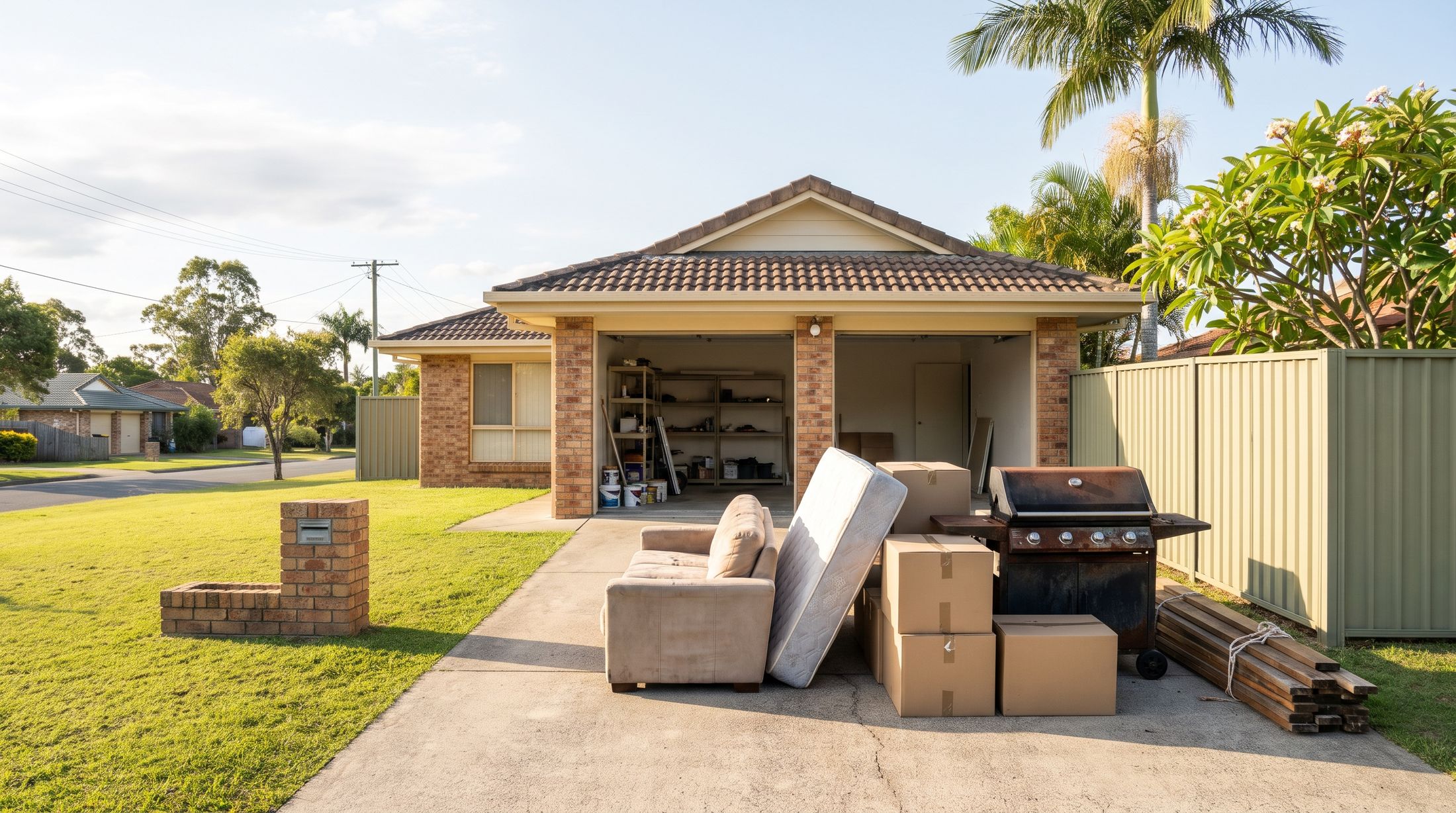
Timber, packaging and offcuts
- Timber offcuts and old framing
- Cardboard, plastic wrap and pallets
- Metal offcuts, pipes and old fixtures
- Windows and doors
- Insulation, which some crews want bagged
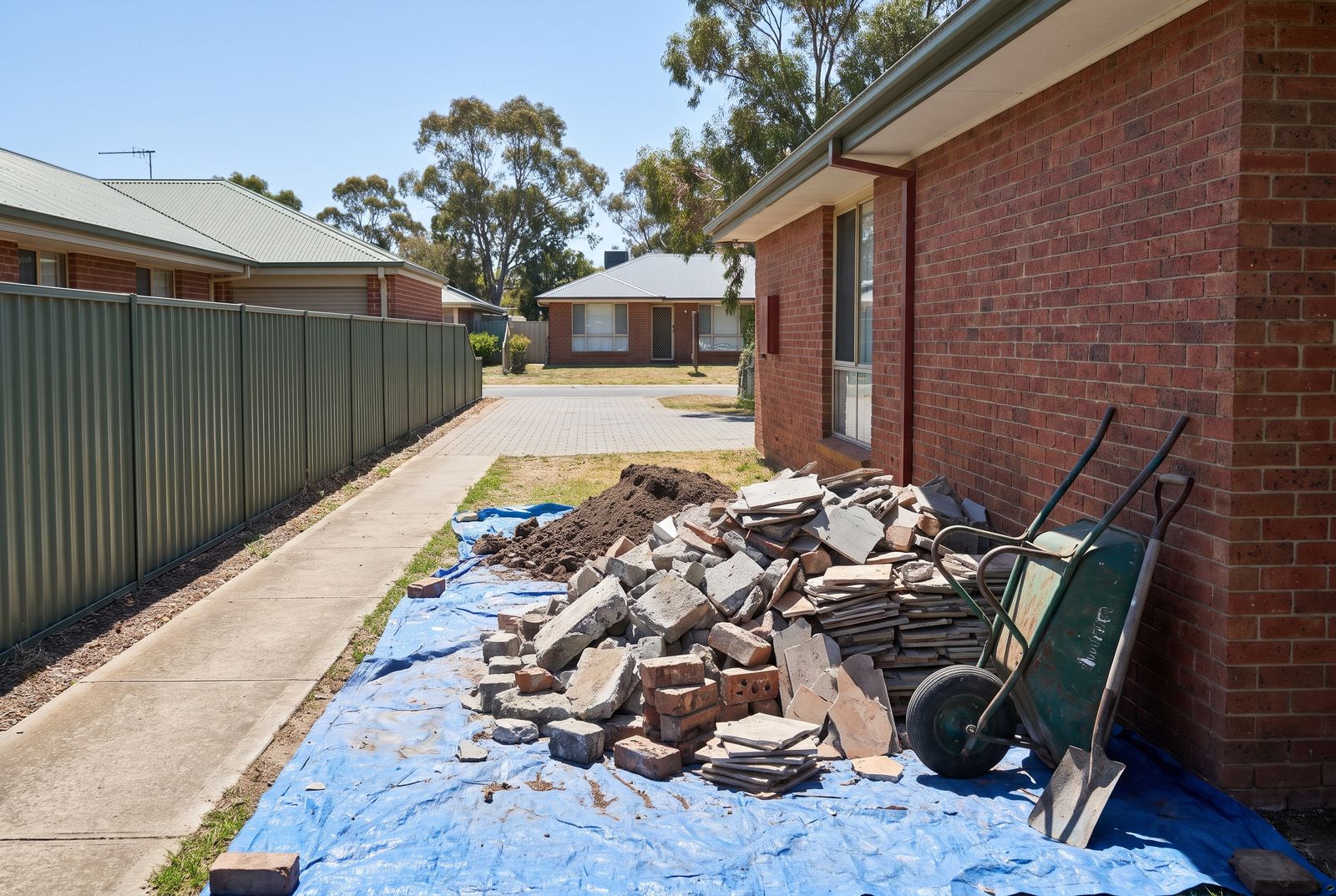
Bricks, concrete and soil
- Bricks and pavers
- Broken concrete and rubble
- Soil and sand
- Usually priced by weight, not by volume
- Usually quoted apart from the light waste
Sometimes included
On some businesses' lists and not others. Ask when they call.
- A sweep where the pile was sitting
- A tip receipt or docket for your records
- Before and after photos of the job
- Regular pick-ups through a longer renovation
- A lower rate for builders with a trade account
Not part of builders waste removal
Most crews will not load these, or they are a separate job. Say so before they come if you have any.
- Asbestos, or anything that might contain it
- Paint tins with liquid in them, solvents and adhesives
- Gas bottles, fuel and other chemicals
- Contaminated soil, which needs its own disposal
- Pulling out the kitchen or bathroom, usually a separate job
- A bin left on site to fill, which is skip bin hire
Builders waste removal prices
Estimated builders waste removal prices in Australia
Light renovation waste is usually priced by the cubic metre, so the size of the pile sets most of the cost. These are estimates of what to expect when a crew carries the waste out and loads it. Every business sets its own price.
| Load size | What that looks like | Estimated price |
|---|---|---|
| 1 to 2 cubic metres | One or two box trailer loads, such as offcuts and old cabinets from one room | $140 to $450 |
| 3 to 4 cubic metres | Three or four box trailer loads | $240 to $720 |
| 5 to 6 cubic metres | About half a truck. A kitchen removal is often 4 to 8 cubic metres | $280 to $1,080 |
| 8 to 10 cubic metres | A full load on many trucks, such as a builders strip-out | $400 to $1,790 |
Estimates only, for light mixed renovation waste such as timber, plasterboard, cabinets, carpet and packaging, loaded by the crew with easy access. Bricks, concrete, tiles, soil and rubble are priced by weight and are not in these figures. Truck sizes differ. Every business sets its own price. Estimates checked on 12 November 2026.
Rates and charges to ask about
Typical ranges for waste loaded by a crew.
- Light renovation waste, by volume$80 to $180 a cubic metre
- Bricks, concrete, tiles, soil and rubble$300 to $800 a tonne
- Minimum charge for a small load$130 to $350
- Garden waste, kept apart$70 to $120 a cubic metre
What moves the price
- VolumeLight waste is usually priced by the space it takes in the truck, and bigger loads often cost less per cubic metre. Break down frames and stack sheets flat to save room.
- WeightBricks, concrete, tiles and soil are priced by weight. A heavy load can cost more than the same space of light waste.
- Mixed loadsA tip usually charges a mixed load at the rate of its dearest part. Heavy and light waste kept in separate piles usually cost less to take away.
- Minimum chargeMost businesses have a minimum charge that covers the truck, the crew and the trip, often $130 to $350. A very small pile can cost the same as one twice its size.
- AccessStairs, a long carry from the backyard and a narrow driveway all add loading time. A pile with a short, clear carry is the quickest to clear.
- Number of visitsSeveral small pick-ups usually cost more than one well-planned load. On a long job, some businesses give a lower rate for regular pick-ups.
Which one
Light or heavy building waste: which do you have?
Rubbish removal businesses that work in Australia usually price building waste by what is in the pile, because that decides what the load costs to tip. Say which of these you have when you ask for a price.
Priced by the cubic metre
Light mixed renovation waste
Timber, plasterboard, old cabinets, carpet, packaging and offcuts. It is bulky but not heavy, so it is usually priced by the space it takes in the truck. Some price lists cover about 130 to 160 kilograms a cubic metre and charge extra weight on top. This is the waste the estimates above are for.
Best for a kitchen removal, old flooring or fit-out waste
Priced by the tonne
Heavy waste
Bricks, concrete, tiles, soil, sand and rubble. A cubic metre of brick or concrete rubble can weigh 1.5 tonnes or more, so a small pile soon reaches the weight a truck can carry. It is usually priced by weight, as an estimate $300 to $800 a tonne. A clean load of only concrete or brick usually costs less to tip than a mixed one.
Best for a knocked-out wall, an old path or dug-out soil
Light and heavy in one pile
Mixed load
A bathroom strip-out is the usual example: tiles and mortar in with plasterboard, a vanity and packaging. The tiles and mortar can make it weigh far more than it looks, and a tip usually charges the whole load at the rate of its dearest part. Keep the heavy waste in its own pile if you have the room, and say what is in the load when you ask for a price.
Best kept as two piles where there is room
Related jobs
Rubbish, garage and house jobs, with estimated prices
A renovation often throws up more than building waste. Each of these jobs has its own page with a price table and what to check first.
Each range runs from the smallest job on that page to the largest. Estimates only. Every business sets its own price.
How it works
How builders waste removal works with Take My Clutter
- 1Tell us what needs to go
Four quick questions: what it is, how soon, where it is and who to call.
- 2We match it to a local specialist
Your job goes to one local rubbish removal or skip bin business that works in your area.
- 3They get back to you within the hour
They talk the job through with you and give you a quote.
- 4You decide
Like the quote? Book it in with them directly.
On the day
What to expect when the builders waste crew comes
How a builders waste pick-up usually runs, from the first look at the pile to the truck driving away.
Most jobs are done by two people with a tipper or caged truck. Truck sizes differ, and many hold about 8 to 10 cubic metres.
Most crews look over the pile with you before they lift anything, to confirm what is going and what is staying. Point out anything you want kept.
If the pile is bigger than the photos showed, most businesses give you the new price before they load. You can usually leave some for a second visit.
Most crews carry the waste from where it sits and load the truck by hand. On a working site they usually fit in around the trades.
A typical renovation load is often cleared in an hour or two. Stairs, long carries and heavy waste take longer.
Many crews sweep where the pile sat. Ask for a tip receipt or docket if you or your builder need proof of where the load went.
Before they arrive
Six things to do before the truck arrives
A little prep makes the price more accurate and the loading quicker.
- 1Send photos
Photograph the pile with something for scale, such as a wheelie bin, plus the path to the truck. Photos usually get you a closer price than a description.
- 2Say what is in it
List the materials and name anything heavy: bricks, concrete, tiles or soil. A pile described as light that turns out to be rubble gets a new price on the day.
- 3Keep heavy and light apart
Stack bricks, concrete and soil away from timber, plasterboard and packaging. Two clean piles are easier to price and usually cost less to take away than one mixed pile.
- 4Check for asbestos first
The national asbestos agency says a home built or renovated before 1990 might contain asbestos, and to check before any work starts. Many crews stop work if they find suspect material.
- 5Make it easy to reach
Stack the waste in one place and clear the path. Tell the business about stairs and narrow or locked gates.
- 6Set aside paint and chemicals
Paint tins with liquid in them, solvents, adhesives and gas bottles are not building waste. Most crews will not take them, so ask the business where they can go.
Before you book
What to ask a builders waste removal business before you book
Six questions that keep the price you are given close to the price you pay.
Is it priced by volume or by weight?
Light renovation waste is usually priced by the space it takes, and bricks, concrete and soil by weight. Say what is in the pile.
Does sorting change the price?
A mixed load usually costs more to tip than the same waste kept apart. Ask what they want kept in its own pile.
Do you want plasterboard kept apart?
Many tips ask for it to be separate. Say how much there is when you ask for a price.
Can you work around my trades?
On a working site, ask whether the crew can load from one side, or come first thing or at the end of the day.
Do I get a tip receipt?
Ask for a tip receipt or weighbridge docket when the job is done. Builders and landlords often need that paperwork.
What if something looks like asbestos?
Ask what the crew does if it finds sheeting or tiles it is not sure about. Most will not load it.
Asbestos
Asbestos in building waste: what to know before you book
If the job may turn up asbestos, sort that out before anything is loaded.
Bins and skips
Asbestos stays out of bins and ordinary skips
Asbestos waste cannot go in a household bin or an ordinary skip. If you think some is in the pile, say so when you ask for quotes, so it is priced as an asbestos job.
Who removes it
Ask for a licensed asbestos removalist
Each state sets who may remove asbestos, and how much. A licensed asbestos removalist is the safe choice everywhere. Do not assume your builder or plumber is licensed for it.
Where it goes
Ask where the waste is going
Asbestos waste can only go to a site allowed to take it. In some states you can be held responsible if it is not disposed of lawfully, so ask where it is going and keep the paperwork.
Rules and council services differ from place to place. Your state page has the detail: New South Wales, Victoria, Queensland, Western Australia, South Australia, Tasmania, Australian Capital Territory, Northern Territory.
A crew or something else
A crew with a truck, a skip bin or the tip: which suits your site
A paid pick-up is one of several ways to clear building waste. Here is when each one fits.
Book a builders waste pick-up
A crew clears a pile that is already there in one visit and does the lifting. It suits a tight site, or a job where nothing can sit on the street.
Get a builders waste removal quoteHire a skip bin
A skip sits on site and you fill it yourself, which suits waste that builds up over days or weeks. Check whether it needs a permit on the street.
Skip bin hireTake it to the tip
It needs a ute or trailer and someone to load it. Tips charge heavy waste by the tonne, so ask about the fee first.
Find a tip near youMostly concrete, bricks or soil
Heavy waste is priced by weight, not by the space it takes. If that is most of your load, start with the page for it.
Concrete disposalWhere we cover
Local rubbish removal pages by state and city
Builders waste removal does not have a page of its own for each suburb. Pick your state or city for local rubbish removal prices, council collections and tips.
Questions
Builders waste removal in Australia: your questions answered
Straight answers on price, heavy waste, asbestos, skips and how the day works.
How much does builders waste removal cost in Australia?
As an estimate, light renovation waste loaded by a crew runs $140 to $450 for 1 to 2 cubic metres, $280 to $1,080 for 5 to 6 cubic metres and $400 to $1,790 for 8 to 10 cubic metres, a full load on many trucks. Bricks, concrete and soil are priced by weight and are not in those figures. Every business sets its own price. Tell us what needs to go and we pass the job to one local business.
Why are bricks, concrete and soil priced differently?
They are far heavier. A cubic metre of brick or concrete rubble can weigh 1.5 to 2.4 tonnes, against roughly 200 to 400 kilograms for mixed renovation waste, and tips charge heavy waste by the tonne. As an estimate, heavy waste loaded by a crew runs $300 to $800 a tonne. A clean load of only concrete or brick usually costs less than one mixed with other waste.
What counts as builders waste?
Anything that comes off a renovation or a small building job: timber, plasterboard, tiles, old kitchens and bathrooms, carpet, doors, windows, metal and packaging, plus bricks, concrete, rubble and soil. Most businesses take all of it, but heavy waste is usually quoted apart from the rest. Asbestos, paint and chemicals are not part of it.
Where is asbestos found in a kitchen or bathroom?
The national asbestos agency lists wall and ceiling sheeting in wet areas such as the kitchen, bathroom, toilet and laundry, the backing for wall tiles and splashbacks, carpet underlay and vinyl floor tiles. Its advice is to check before you start any work: ask an asbestos professional and have a sample tested, or assume the material contains asbestos and take precautions.
Do I need to sort the waste first?
You do not have to, but it usually lowers the price. Keep bricks, concrete and soil in one pile and timber, plasterboard and packaging in another. A mixed load usually costs more to tip than the same waste kept apart, so rubble mixed through a light pile can lift the cost of the whole load.
Does plasterboard need to be kept separate?
Often, yes. Many tips ask for plasterboard to be kept apart from other building waste, and some businesses charge more to handle it that way. Say how much there is when you ask for a price. Stacked flat in its own pile, it is also quicker to load.
How long does it take, and how soon can a crew come?
Loading a typical renovation pile often takes an hour or two. How soon a crew can come depends on the business and how busy it is, so ask when they call. The weeks before Christmas and around the end of the financial year are the busiest, so book ahead then. When you send us the job, a local business gets back to you within the hour.
Can a crew work around my builder or tradies?
Usually, yes. On a working site most crews load from one side while the trades keep going, or come first thing or at the end of the day. For a longer renovation, some businesses book a pick-up at each stage, such as after the demolition and again at the end, often at a lower rate per load.
Do I need to be there?
Not always. Most crews like someone to walk the pile with them at the start, to confirm what goes and what stays. That can be you, your builder or someone else on site. If the pile is easy to reach and clearly agreed, many businesses can load it without you there.
How do I know the waste is disposed of properly?
Every business we pass jobs to is licence-checked and insured. Ask where the load is going, and ask for a tip receipt or weighbridge docket when the job is done. Builders and landlords often need that paperwork, and many businesses give it on request.
Official sources
Checked on 12 November 2026. Rules and fees change, so check the official page before you book.
- Asbestos and Silica Safety and Eradication Agency, Householders and home renovators
- Asbestos and Silica Safety and Eradication Agency, Asbestos identification, removal and disposal
- NSW Government, Unlicensed asbestos removal
- Victorian Asbestos Hub, Safe removal steps
- Queensland Government, Frequently asked questions: homeowners and the general public
- Department of Health, Western Australia, Asbestos removal
- Government of South Australia, Asbestos: homeowners
- WorkSafe Tasmania, Asbestos
- WorkSafe ACT, Asbestos licensing
- NSW Government, Disposal of asbestos waste
- Victorian Asbestos Hub, Disposal
- NSW Environment Protection Authority, Household building and renovation
- Victorian Asbestos Hub, Homeowner or renovator
- Queensland Government, Asbestos: a guide for minor renovation
Ready to get it gone?
Tell us what needs to go. A local specialist gets back to you within the hour.