

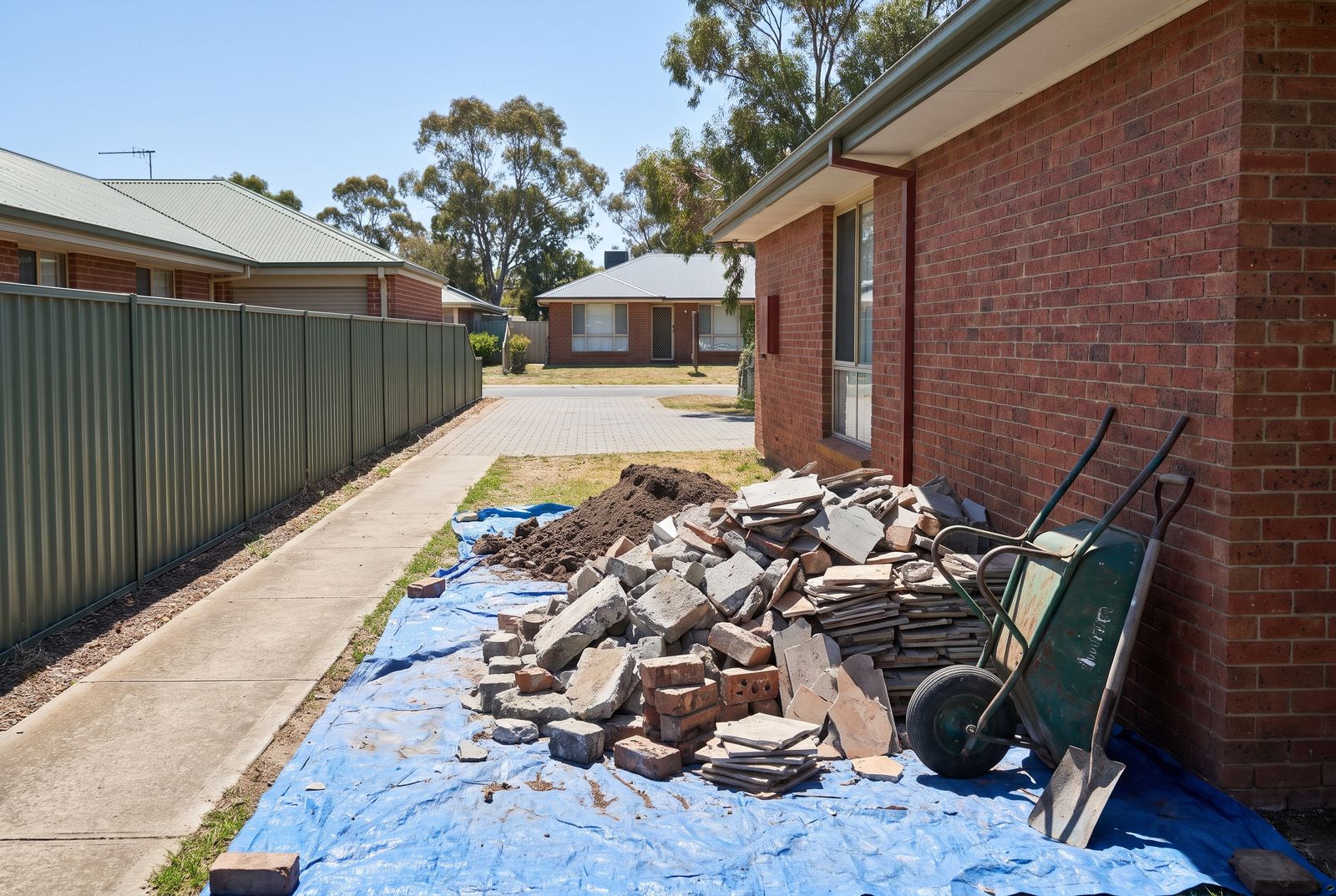
Soil removal
Soil to get rid of? A local rubbish specialist gets back to you within the hour.
Tell us how much soil there is, what is mixed through it and your suburb. A local rubbish removal business then gets in touch.
- Licence checked and insured
- Verified by Take My Clutter
- Matched with a builders waste removal specialist
4.8
Collective Google Rating
From 500+ reviews
Who gets your job
Checked before they get your job
A local business gets back to you within the hour.
We check each business's licence before it gets jobs.
Every business we pass jobs to is insured.
Only verified businesses get your job.
What you get
What soil removal typically covers
Soil usually leaves a property in one of three ways: a crew shovels or digs it onto a truck, you fill a heavy skip, or you cart it to the tip yourself. What is included changes between businesses, so go through it when they call.
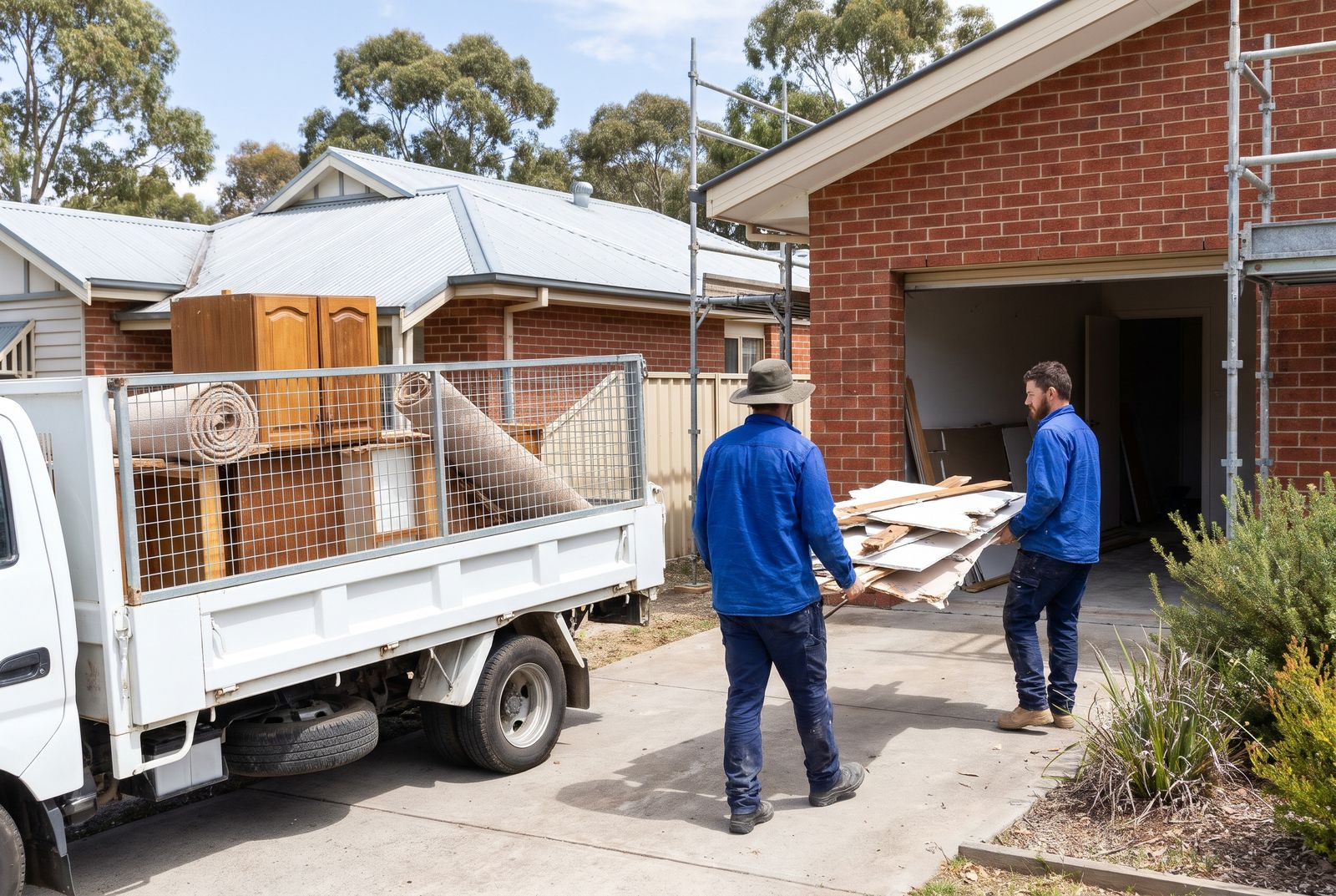
A crew loads it for you
- Soil shovelled or dug onto the truck for you
- Most crews price soil by the tonne
- The tip fee is usually in the price
- A small digger or loader on some jobs
- Clean soil usually costs less than mixed
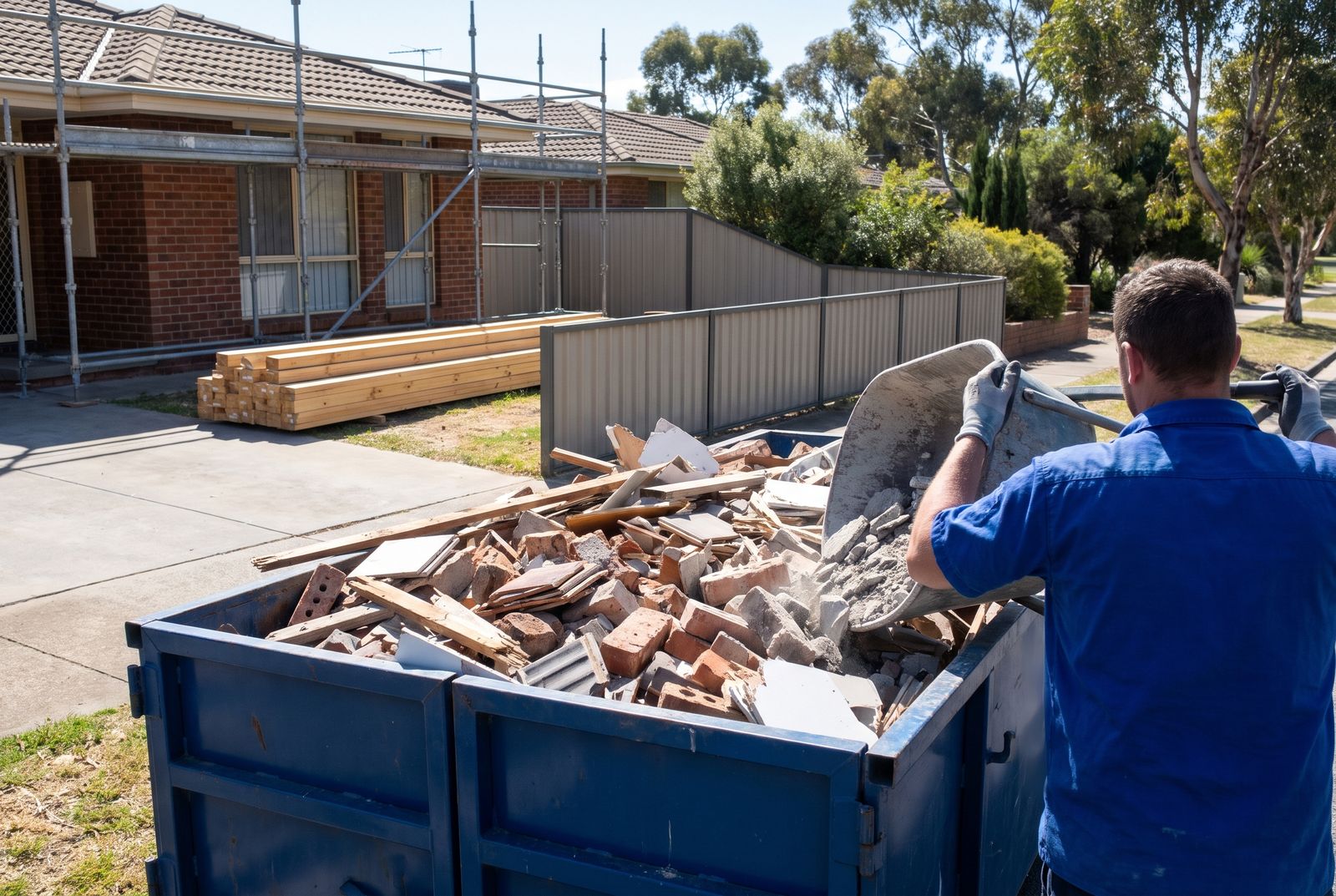
A heavy skip you fill
- A bin set aside for soil and other heavy loads
- You shovel or barrow the soil in
- Filled to the rim and no higher
- A weight limit on some bins
- Drop-off, collection and tip fees in the hire
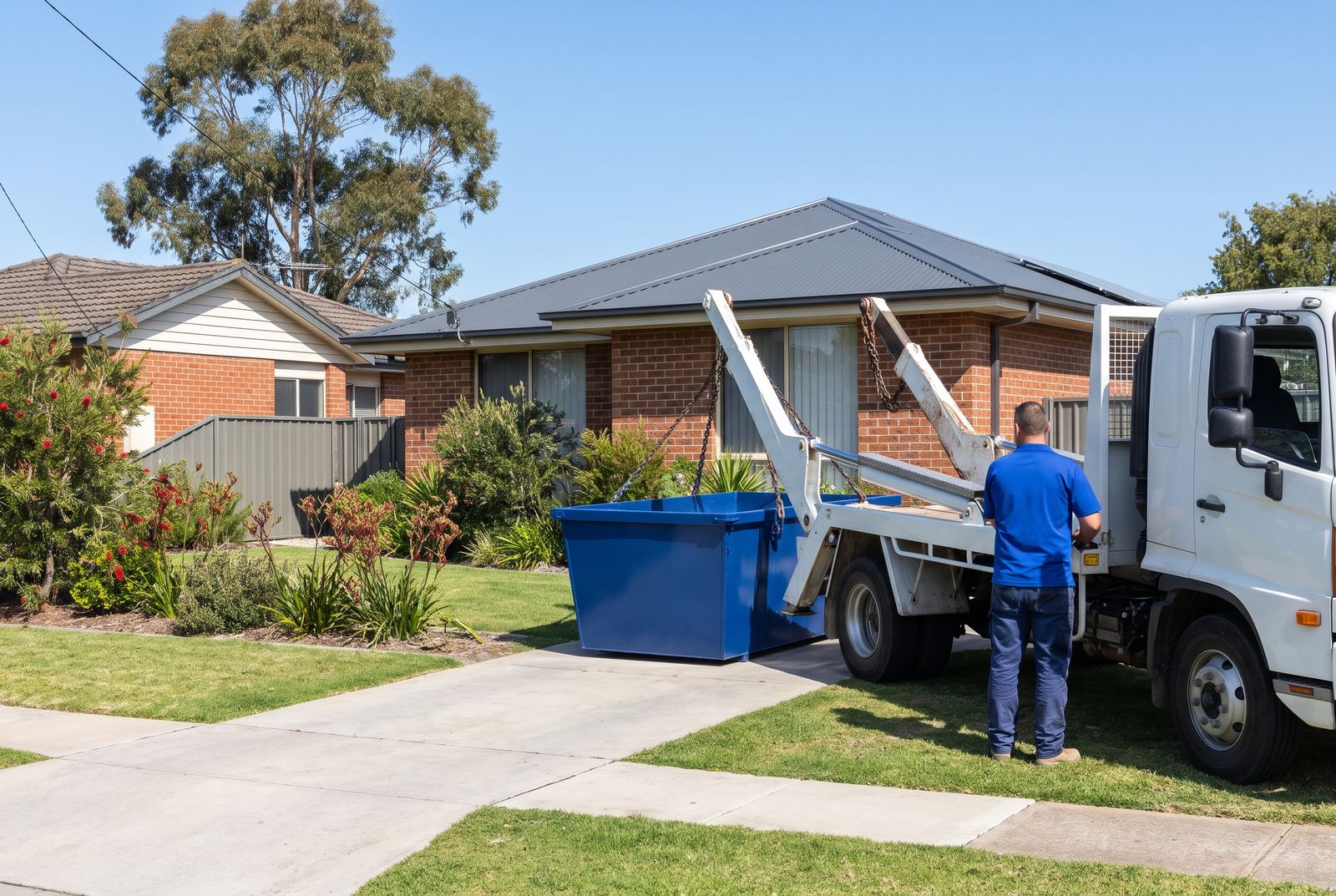
Skip drop-off and collection
- Placed by the truck where its arm can reach
- Room needed for the truck to back in and lift
- Hire usually runs for a set number of days
- Extra days often charged one by one
- Taken away full once you are done
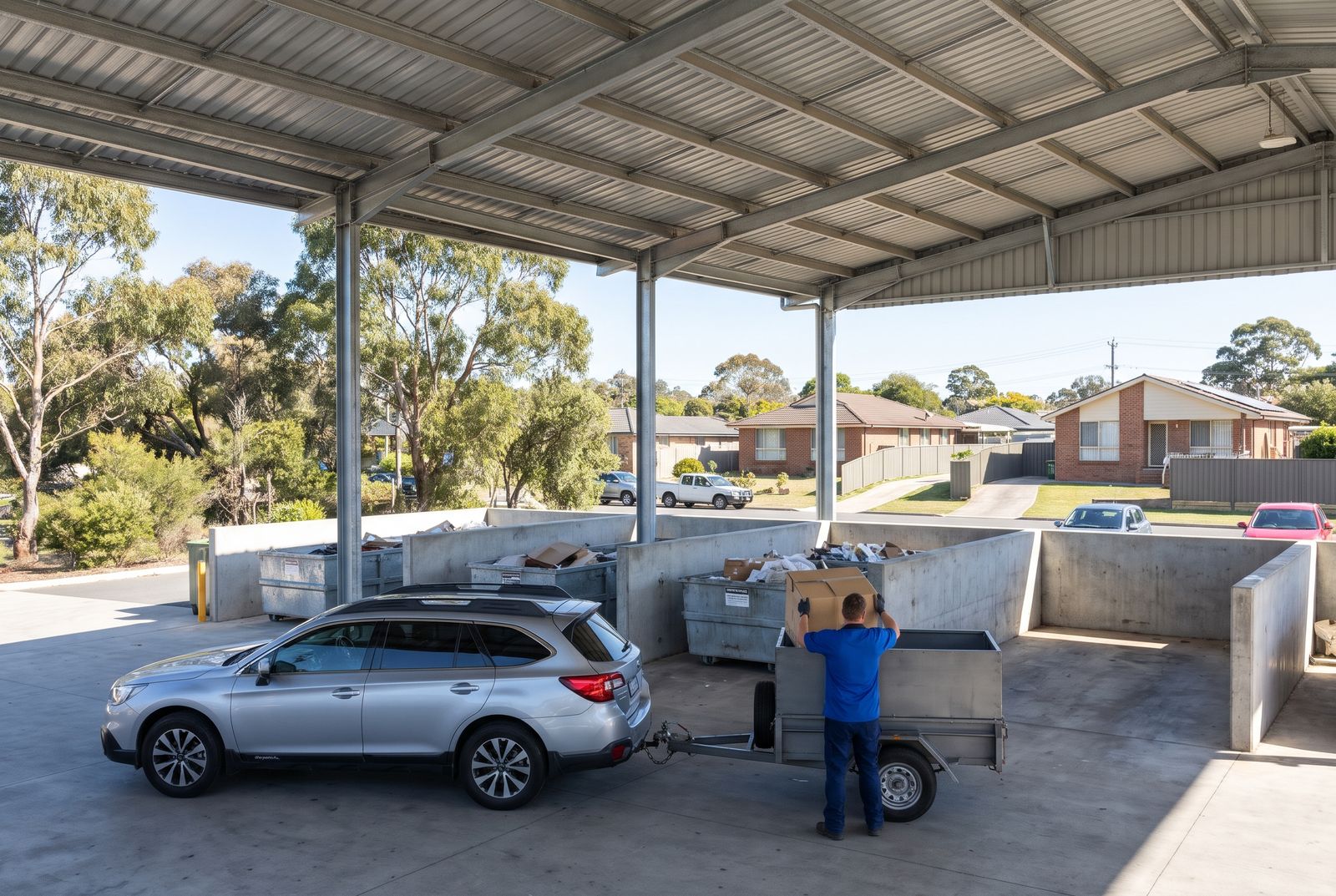
Taking it to the tip yourself
- Many council tips take clean soil or fill
- Charged by the load or over a weighbridge
- Soil with rubbish in it usually costs more
- Big soil loads may go to one site only
- Soil is heavy for a car trailer
Sometimes included
Included by some businesses and charged extra by others. Ask about each one.
- Digging the soil out, not just carting it
- A small digger or loader for a big pile
- Loading a skip you have hired yourself
- Grass and roots stripped off first
- Levelling the ground once the soil is gone
Not part of soil removal
These usually cost extra or go as a separate load. Tell the business about any of them when you book.
- Soil that might be contaminated
- Asbestos, or soil with broken sheeting in it
- Tree stumps and large roots
- Concrete, bricks and building rubbish
- Paint, oil and chemicals
Soil removal prices
Estimated soil removal prices in Australia
Soil can leave in your own trailer, in a skip you hire, or on a crew's truck, and each is priced its own way. The figures below are estimates. Each business sets its own rates.
| How it goes | What you pay for | Estimated price |
|---|---|---|
| Trailer load at a tip | Gate fee for clean soil you bring in | $40 to $100 |
| Weighbridge, per tonne | Clean soil weighed in at a tip | $40 to $230 |
| 2 cubic metre skip | About 2.6 tonnes when full. You fill it | $250 to $460 |
| Crew, per tonne | Shovelled in and taken away for you | $300 to $800 |
Estimates only. The tip prices are gate fees for clean soil with nothing else mixed in, and tips often set a minimum charge. The skip price is for a heavy bin on a normal hire, with the drop-off, the collection and the tip fee included. The crew price assumes hand loading with easy access. Estimates checked on 14 November 2026.
Rates and charges to ask about
Typical 2026 ranges for a heavy skip, and for green waste a crew takes. Each business sets its own.
- Each extra day the skip stays$10 to $70 a day
- Weight over a heavy skip's limit$270 to $480 per tonne
- Soil tipped into a concrete-only skip, up to 4 cubic metres$100 to $200 a bin
- Grass and plants kept apart, loaded by a crew$70 to $120 a cubic metre
What moves the price
- Clean or mixedClean soil with nothing else in it costs the least to tip. Rubbish, concrete, roots or plastic through it usually means a dearer mixed price.
- ContaminationSoil that might be contaminated needs testing first. One council charges $348 a tonne for low-level contaminated soil, against $45 for clean fill.
- WeightSoil is heavy. For soil, sand and clean fill, one state government's default figure is 1.3 tonnes a cubic metre, and one business puts dense clay at about 1.8 to 2 tonnes.
- Digging or cartingA price that includes digging the soil out is higher than one to cart away a pile that is ready. Ask which one you are being quoted.
- AccessA truck or small loader needs room to reach the pile. A narrow side path can mean barrowing by hand, which takes longer.
- Distance to the tipThe further the tip or recycler is from your place, the more the cartage usually costs.
Tip fees Skip bin sizes and prices Rubbish removal cost Builders waste removal
Which soil
Clean fill, mixed soil or contaminated soil: which do you have?
In Australia, what is in the soil usually decides where it can go and what it costs. Tell the business which of these matches yours.
Only soil, sand, clay or rock
Clean fill
Natural soil, sand, clay, gravel or rock with nothing man-made mixed in. It usually costs the least to tip. One state's environment regulator says sites without its permission can only take fill with all waste removed, so far as reasonably practicable.
Best for soil from a garden bed, a pool dig or levelling
Roots, rubble or rubbish through it
Mixed soil
Once bricks, concrete, roots, plastic or other rubbish are in the soil, many tips charge it as mixed or building waste, which costs more. One state's environment regulator counts plastic, concrete, tiles, building materials, paper and green waste as waste in soil.
Best kept in its own piles, apart from the soil
From industrial land, or with chemicals or asbestos
Possibly contaminated soil
Soil that may hold chemicals or asbestos needs testing before it goes anywhere. One state's environment regulator says contaminated soil can only go to a licensed landfill, and asks for laboratory results as proof that soil is clean.
Best tested before you book anything
Related heavy and garden waste jobs
Weight
How much soil weighs, next to concrete and garden waste
Soil is priced by weight far more often than by space. The table applies the Queensland Government's standard factors for stockpiled waste to piles of three sizes, with concrete and garden waste beside soil for comparison.
| What is in the pile | Tonnes a cubic metre | A 1 cubic metre pile, about | A 2 cubic metre pile, about | A 4 cubic metre pile, about |
|---|---|---|---|---|
| Soil, sand and clean fill | 1.3 | 1.3 tonnes | 2.6 tonnes | 5.2 tonnes |
| Concrete | 1.5 | 1.5 tonnes | 3 tonnes | 6 tonnes |
| Grass and garden waste | 0.15 | 150 kilograms | 300 kilograms | 600 kilograms |
From the Queensland Government's default factors, which it gives site operators as a general guide rather than weighed figures. Wet or heavy clay soil can weigh more. Read on 13 November 2026: Queensland Government, Volumetric surveys.
Ask what weight a skip or truck can take before you book. A pile of soil reaches that limit long before it looks big.
How it works
How soil removal works with Take My Clutter
- 1Tell us what needs to go
Four quick questions: what it is, how soon, where it is and who to call.
- 2We match it to a local specialist
Your job goes to one local rubbish removal or skip bin business that works in your area.
- 3They get back to you within the hour
They talk the job through with you and give you a quote.
- 4You decide
Like the quote? Book it in with them directly.
On the day
What happens when a crew takes your soil away
The usual order of a soil job, from checking what is in the pile to the last truckload leaving.
Many crews arrive with a tipper. Because soil is so heavy, a load is limited by weight more than by how full the tray looks.
Most crews look at what is in the soil before loading. Point out any rubble, roots or old sheeting mixed through it.
Loose soil is shovelled or barrowed onto the truck. For a big pile or a dig, some businesses bring a small digger or loader.
Small loaders need a gap of around 800 millimetres on one business's figures. Narrower than that, soil is usually barrowed out by hand, which takes longer.
Soil swells once it is dug, so a pile can be bigger than the hole it came from. If the load is larger than quoted, most businesses re-price before carrying on.
Most crews rake or sweep where the pile was. Ask for the tip or weighbridge docket if you need a record of the load.
Before they arrive
Six things to do before your soil is collected
A few minutes of prep makes the price closer and the job quicker.
- 1Measure the pile
Multiply length by width by height in metres for a rough volume. Dug soil takes up more room than it did in the ground, often 1.4 to 1.5 times as much.
- 2Keep it clean
Keep rubbish, rubble, roots and plastic out of the soil pile. Clean soil usually costs the least to get rid of.
- 3Separate the turf
Strip grass and plants off first and keep them apart. They can usually go as green waste, which tips charge less for than mixed soil.
- 4Know where it came from
If the soil is from an old industrial or commercial site, or you can see waste in it, say so. One state's environment regulator says soil from those sites has a higher risk of contamination.
- 5Send photos
Photograph the pile or the area to be dug, with something beside it for scale, and the way in for a truck or small loader.
- 6Clear the way in
Measure the narrowest gap a loader would pass through and clear the path. Say if there are steps, slopes or soft lawn on the way.
Before you book
Six questions to ask before soil is taken away
Asked up front, these stop most surprises once loading starts.
Is it digging or just carting?
Ask whether the quote covers digging the soil out, or only taking away a pile that is ready.
What if the soil is not clean?
Ask what the price becomes if rubble, roots or rubbish turn up in the soil once loading starts.
Can a loader get in?
Give the narrowest width on the way in. Ask whether they bring a small loader or barrow by hand, and what each costs.
Is the skip meant for soil?
If you hire a skip, ask whether it is rated for soil and what weight it can hold.
Does it need testing?
If the soil came from an old industrial or commercial site, ask whether it must be tested before it can go.
How many trips will it take?
Ask how much soil one truck carries and what an extra trip costs.
A crew or something else
A crew, a heavy skip or the tip: which suits your soil
There are four usual ways to move a pile of soil off a property. This is when each one makes sense.
Book a crew to load it
A crew shovels or digs the soil out and takes it away, often in one visit. It suits tight access, or a property with no room for a bin.
Get a soil removal quoteHire a heavy skip
You fill a bin meant for heavy loads as you dig, and it is collected when you finish. It suits soil that comes out over several days.
Skip bin hireTake it to the tip
You shovel it onto a trailer, tow it there and pay at the gate. Many council tips take clean soil, so check yours does, and keep the load light enough for the trailer.
Find a tip near youSoil mixed with building waste
Where the dirt has rubble, timber or old renovation waste through it, a builders waste crew can clear all of it in one go.
Builders waste removalWhere we cover
Find rubbish removal by state and city
There is no soil removal page for each suburb. Choose where you live to see local rubbish removal costs, council collections and the nearest tips.
Questions
Soil removal in Australia: your questions answered
Straight answers on price, weight, clean fill, contamination and the tip.
How much does soil removal cost in Australia?
A crew that shovels the soil onto its truck usually charges $300 to $800 a tonne, as an estimate, and a heavy skip of 2 cubic metres that you load is $250 to $460. Taking clean soil to a tip yourself is often $40 to $100 for a trailer load, or $40 to $230 a tonne over a weighbridge. Rates differ between businesses.
How heavy is soil?
More than it looks. For soil, sand and clean fill, one state government's default figure is 1.3 tonnes a cubic metre. That makes a full skip of 2 cubic metres about 2.6 tonnes. One business puts dense clay at about 1.8 to 2 tonnes a cubic metre.
What is clean fill?
Natural soil, sand, clay, gravel or rock with nothing man-made through it. It usually costs the least to tip, because it can often be used again as fill. Once rubbish, rubble or roots are mixed in, it is usually priced as mixed waste.
Can I take soil to the tip myself?
Often, yes. Many council tips take clean soil, charged by the load or by weight. Expect roughly $40 to $100 for a trailer load. Bigger soil loads may be taken at only one of a council's tips, and most charge more if there is rubbish in it. Soil is heavy for a car trailer, so check what yours is built to carry.
Why does contaminated soil cost so much more?
It needs testing, and only some sites can take it. One state's environment regulator says contaminated soil can only go to a licensed landfill. One council's fee list charges $348 a tonne for low-level contaminated soil and $45 a tonne for clean fill.
How do I know if my soil is contaminated?
Often you cannot tell by looking. One state's environment regulator says soil from industrial and commercial sites has a higher risk, tells people to check every load for waste, and asks for laboratory results as proof that soil is clean.
Is a skip a good idea for soil?
It can be, for soil you dig out over a few days. Book a bin meant for heavy waste, fill it no higher than the rim, and ask about any weight limit. One business warns that a 6 cubic metre bin's weight limit can be passed with about 3 cubic metres of heavy clay.
What if I find old sheeting or asbestos in the soil?
Stop and get advice before anyone moves it. The national asbestos agency says you usually cannot spot asbestos by eye, that its waste can go only to a facility licensed for it, and that dumping it in a skip or a household bin carries big penalties.
How do I know the soil goes somewhere proper?
The business that gets your job has been licence checked and is insured. Ask which tip or recycler the soil is going to, and keep the docket. One state's environment regulator says everyone in the waste chain has a duty to understand what is in the soil they handle.
How does Take My Clutter fit in?
You tell us the job, and we pass it to one local rubbish removal business that we have checked. They get back to you within the hour with a quote, and you decide whether to book with them.
Guides and tools
Soil and heavy waste guides and tools
Soil and heavy waste guides
Official sources
Checked on 14 November 2026. Rules and fees change, so check the official page before you book.
- Queensland Government, Volumetric surveys: converting volume to weight
- Environment Protection Authority Victoria, Free soil too good to be true? It just might be
- Asbestos and Silica Safety and Eradication Agency, Asbestos identification, removal and disposal
Ready to move the soil?
Describe the pile. A local specialist gets back to you within the hour.