

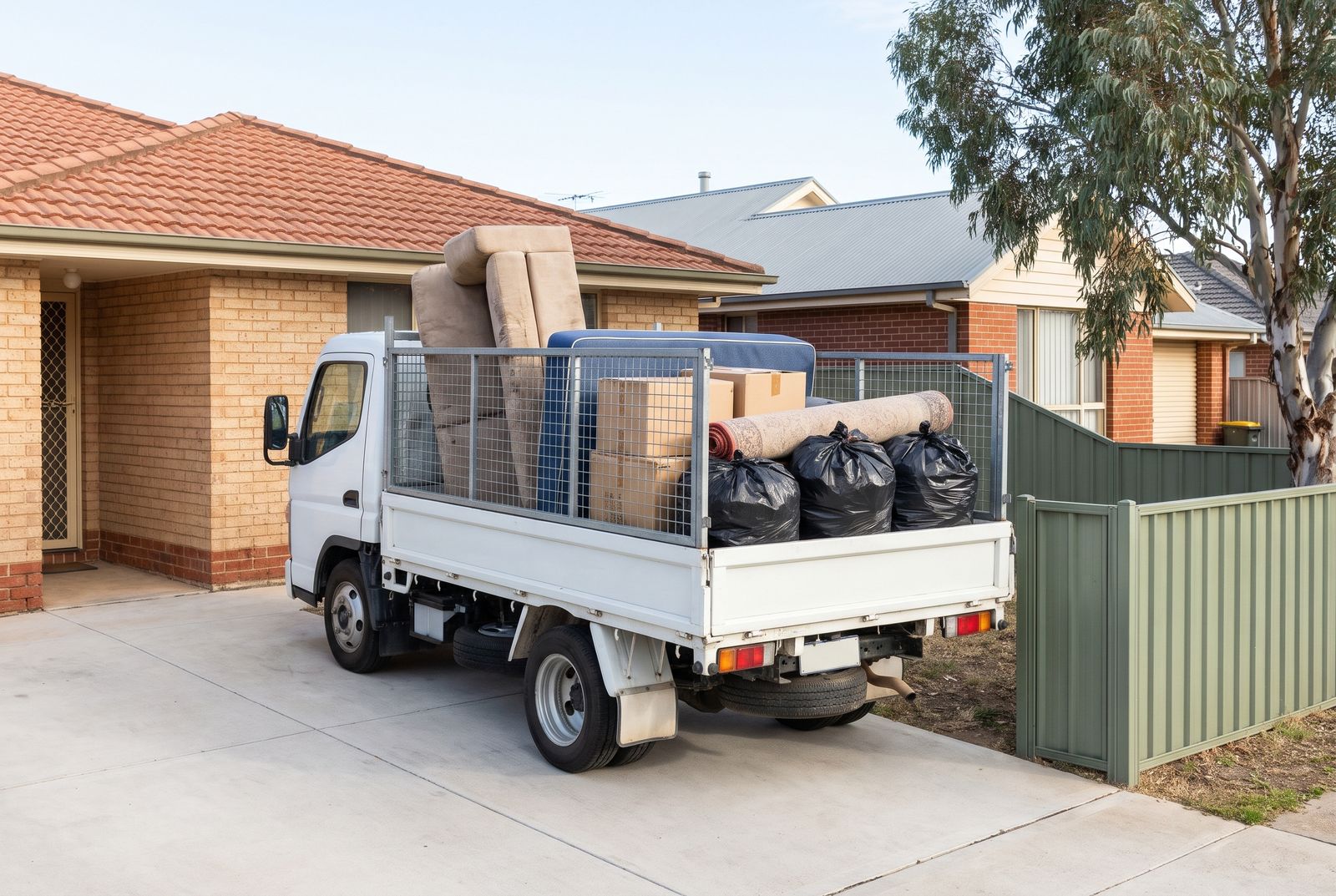
Furniture disposal
Furniture that needs to go for good? A local rubbish specialist gets back to you within the hour.
Tell us what pieces are going and where they are. One local business that takes furniture away gets in touch.
- Licence checked and insured
- Verified by Take My Clutter
- Matched with a furniture removal specialist
4.8
Collective Google Rating
From 500+ reviews
Who gets your job
Checked before they get your job
A local business gets back to you within the hour.
We check each business's licence before it gets jobs.
Every business we pass jobs to is insured.
Only verified businesses get your job.
What you get
What furniture disposal typically covers
Here, furniture disposal means paying a business to take away furniture you are throwing out and get rid of it. Where each piece ends up is up to the business you book, so ask them. Confirm what the price covers when they call.
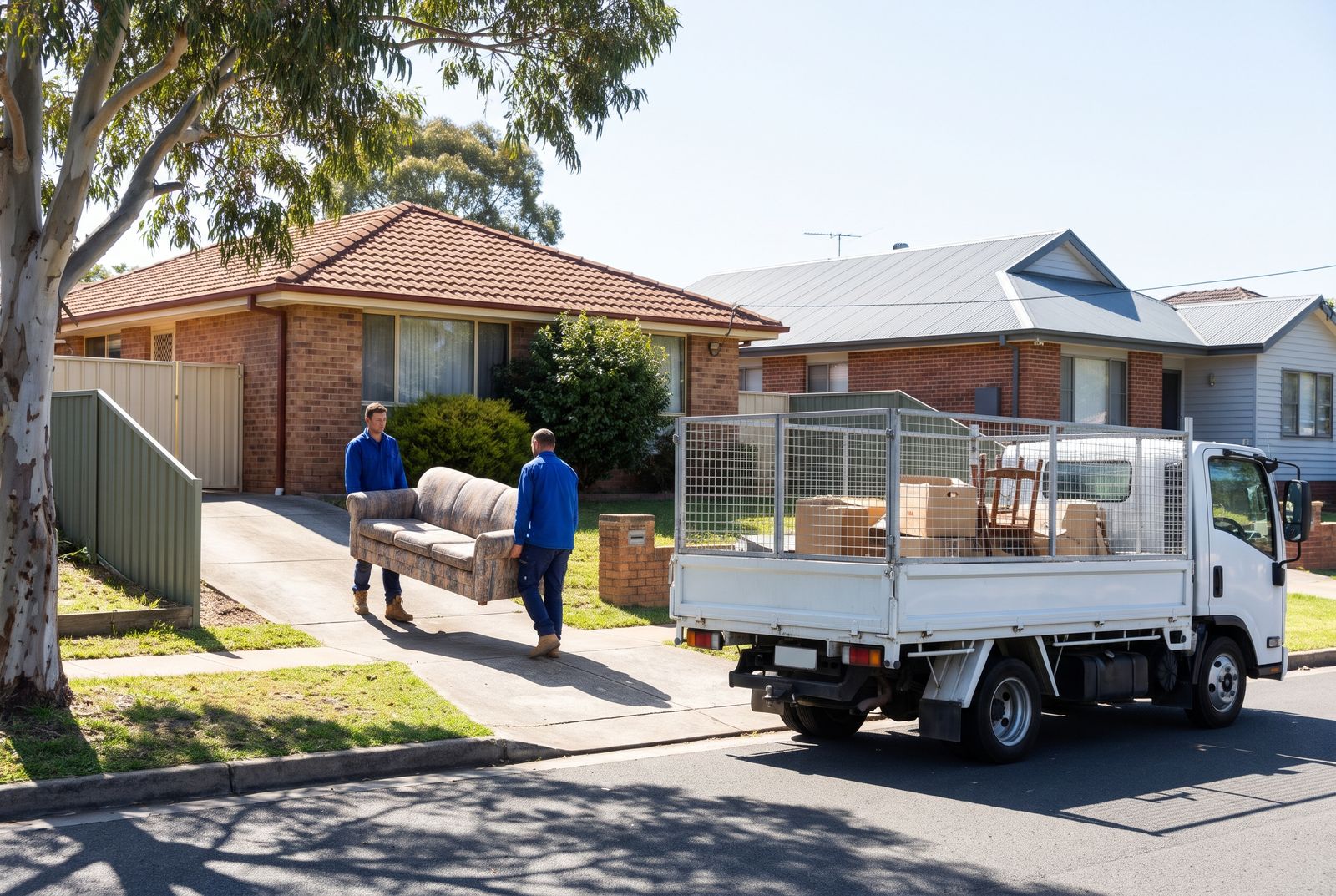
Taken out and taken away
- Each piece lifted and carried out for you
- Pick-ups from upstairs or an apartment, at most
- Loaded onto their truck, so you need no trailer
- The tip or disposal fee, usually in the price
- A last look round before the truck leaves
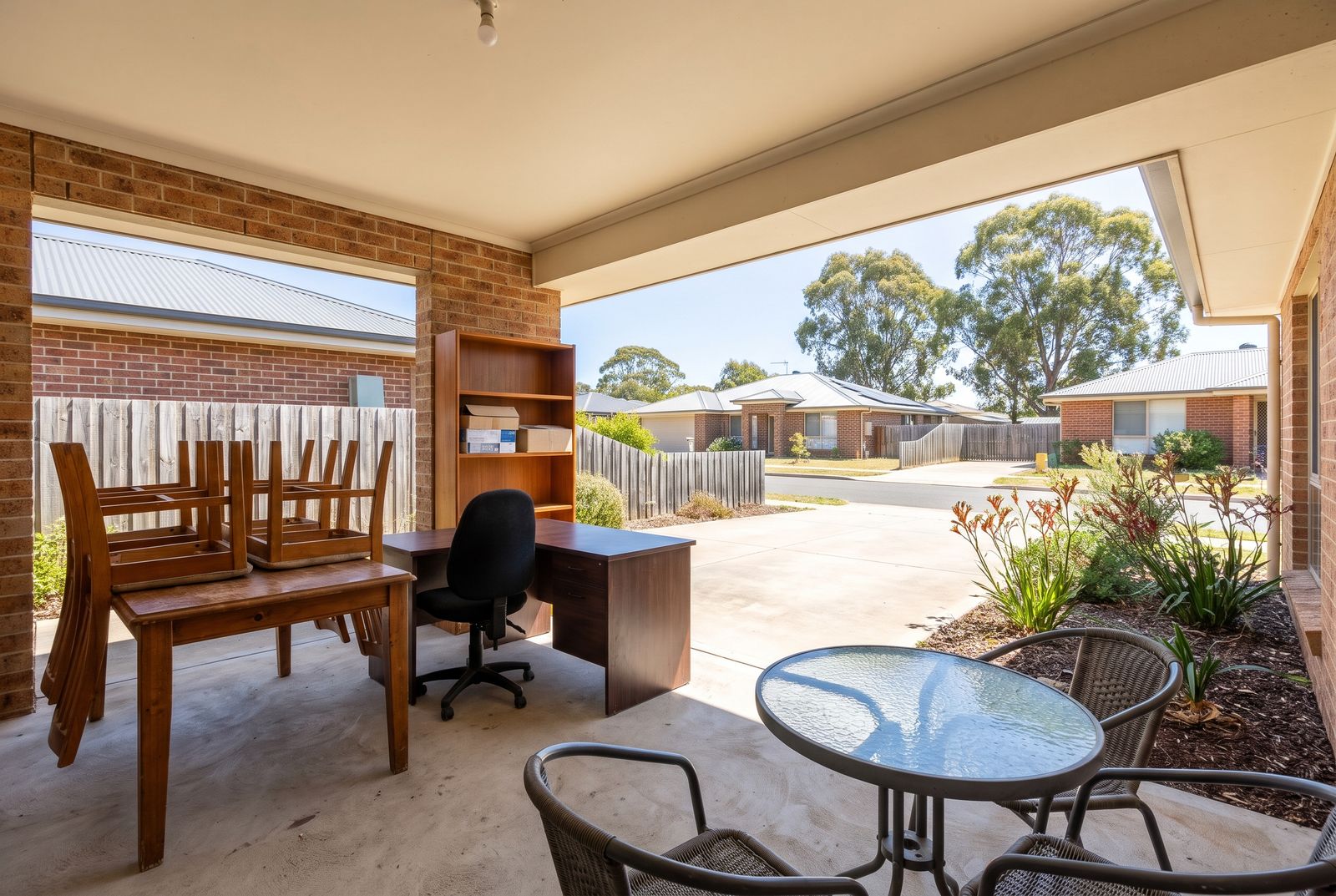
Pieces past using
- Couches, armchairs and recliners that are worn out
- Tables and chairs with broken legs or tops
- Desks, office chairs and filing cabinets
- Bookcases, shelves and display units
- Outdoor settings and sun loungers
- Flat-pack pieces, standing or taken apart
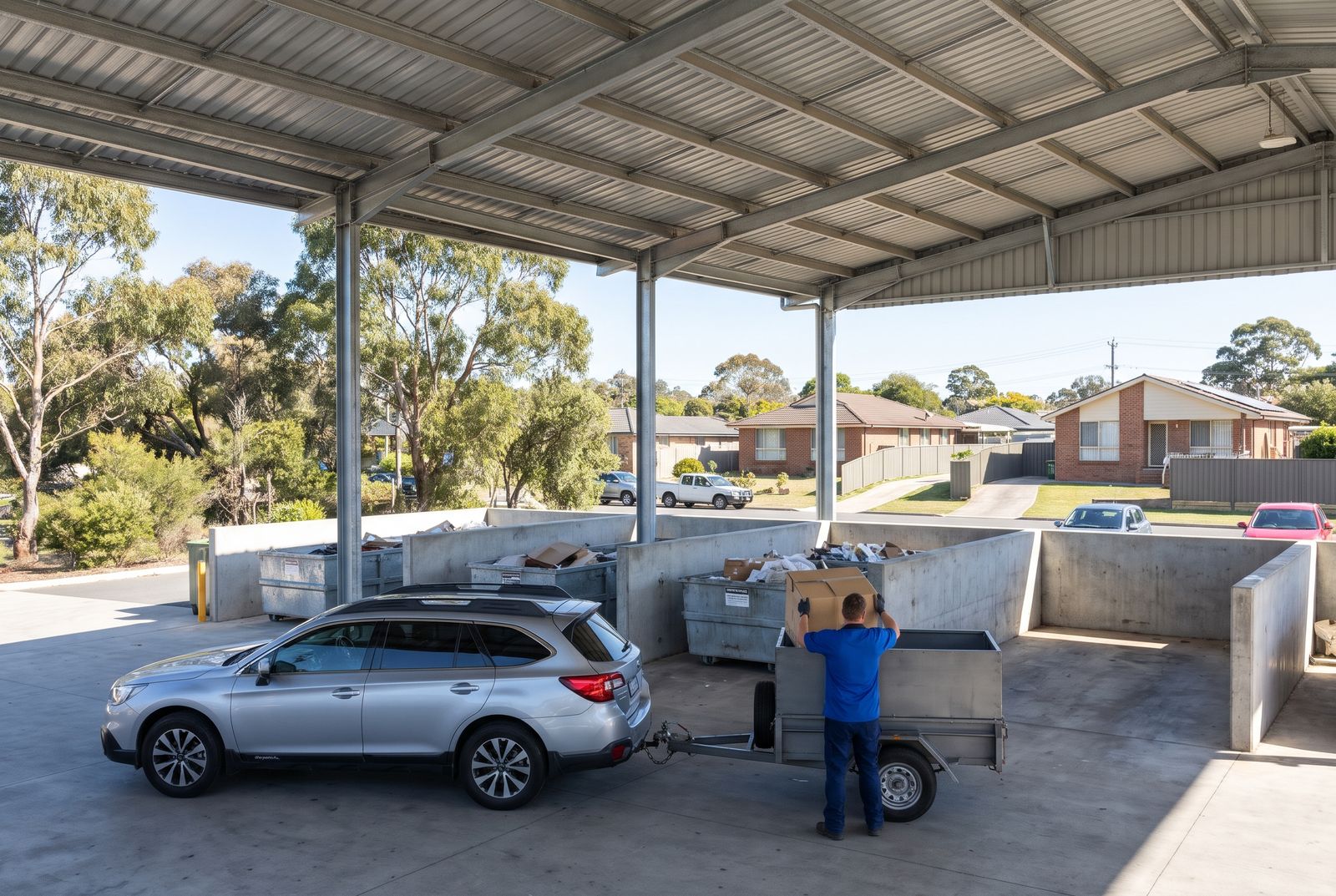
The trip to the tip
- The drive to a tip or transfer station
- Unloading at the other end, done for you
- A mattress fee, where the tip charges one
- Heavy, bulky pieces too big for a car
Records to ask for
- A receipt with the business name and ABN
- Where the load is going, written on the invoice
- A copy of the tip receipt, if you ask
- The truck's registration, for your own records
Sometimes included
Some businesses offer these and others do not. Ask when they call.
- Big pieces broken down so they fit through doors
- Stairs and tight access in the price
- A pick-up while you are out, if access is clear
- A call shortly before the truck arrives
- A kerbside-only option, where you carry it out
Not part of furniture disposal
Most businesses leave these out of a disposal job or price them on their own. Ask before you book.
- Taking furniture you are keeping to a new home
- Selling pieces for you or finding a buyer
- A piano, which is a job with its own prices
- Pieces with bed bugs or biohazards on them
- Asbestos, paint, chemicals and gas bottles
Furniture disposal prices
Estimated furniture disposal prices in Australia
Disposal is usually priced piece by piece for a small job and by the room the load takes on the truck for a bigger one. These are estimates of what to expect to have furniture taken away for good. Every business sets its own price.
| What is going | Examples | Estimated price |
|---|---|---|
| One small piece | A single armchair, a side table or a chair | $80 to $180 |
| Bed frame with its mattress | A base or frame together with the mattress on it | $100 to $240 |
| Sofa or couch | A two or three seater, a recliner, a sofa bed or a corner suite | $100 to $250 |
| Two to five pieces | A lounge suite or a bedroom set | $180 to $400 |
| Whole room of furniture | Everything from one bedroom, lounge room or study | $200 to $740 |
Estimates only, for furniture that is easy to get to and is taken away for good. A single piece can cost a business's minimum charge, which at some businesses is more than the one-piece ranges here. Stairs, long carries and mattress fees can add to it. Every business sets its own price. Estimates checked on 14 November 2026.
Prices for single pieces
Typical ranges to have one piece taken away by itself. A very small job often costs the business's minimum charge instead.
- A mattress by itself$60 to $150
- One wardrobe$120 to $200
- A dining table with its chairs$100 to $350
- One desk$60 to $180
- A bookcase or set of shelves$50 to $150
- An outdoor table and chairs$80 to $300
What moves the price
- How much is goingOne or two pieces are usually priced one at a time, and a bigger load by the room it takes on the truck. A three seat couch can take up 1.5 to 2 cubic metres.
- The minimum chargeMany businesses set a minimum for any job to cover the trip, so a single chair can cost close to the price of a couch.
- Getting it outStairs, a building with no lift, a tight hallway or a long walk to the truck all take longer. Furniture on a ground floor near the street costs the least to get out.
- WeightSolid timber, sofa beds and recliners weigh more and can need a third pair of hands. Some businesses price mainly by what the load weighs.
- Tip feesTip fees and levies differ from state to state, and a mattress often has its own fee at the tip. They are usually built into the price you are given.
- The day you chooseAsking for an urgent, after-hours or weekend pick-up can add to the price at some businesses, and leaving the day open can lower it.
Which way
Pay for a pick-up, use the council collection or take it yourself?
Three common ways to get rid of old furniture in Australia. Each one suits a different load and a different amount of time.
A business carries it out and takes it away
A paid pick-up
You choose the day, and the pieces are lifted from where they stand. It suits heavy pieces, stairs and furniture that has to be gone by a set date, and it is the only one of the three where nobody in the house has to lift.
Best for heavy pieces or a deadline
On the council's dates, with its limits
The council collection
Many councils collect bulky household items, including furniture, on set or booked dates. You carry everything to the kerb yourself, the council limits size, weight and how much goes out, and the date can be weeks off. Put it out only for the collection: at other times, some states class it as illegal dumping.
Best when you can wait and can lift
A trailer or ute and someone to help lift
Your own trip to the tip
Tips and transfer stations take furniture, usually for a fee, and at some, furniture that is mostly metal goes in at no charge. You do the lifting, the loading and the driving. Check the site's fees and limits before you load up.
Best with a trailer and a spare afternoon
More furniture and clear-out jobs
How it works
How furniture disposal works with Take My Clutter
- 1Tell us what needs to go
Four quick questions: what it is, how soon, where it is and who to call.
- 2We match it to a local specialist
Your job goes to one local rubbish removal or skip bin business that works in your area.
- 3They get back to you within the hour
They talk the job through with you and give you a quote.
- 4You decide
Like the quote? Book it in with them directly.
On the day
How a furniture disposal pick-up usually goes
From the call before they arrive to the receipt at the end.
Many businesses ring when the truck is on its way, some 15 to 30 minutes out, so you can open up and be ready.
They look at what is going. If there is more than you described, expect a new price first.
Two people usually do the lifting, with trolleys and straps for the heavy pieces. Big pieces are sometimes taken apart to fit through a door.
Loading a handful of pieces often takes less than an hour, and longer with stairs or pieces that have to come apart.
Payment is usually taken once the job is done. Ask for a receipt that shows the business name, address and ABN.
Walk through the space with them, to be sure everything agreed has gone and nothing you are keeping is on the truck.
Before they arrive
Six things to sort before the furniture goes
A little preparation gets you a firmer price and a quicker job, and leaves you with the right paperwork.
- 1See if it can be passed on
Furniture in good condition can sometimes be sold or given away first. One territory's waste guide puts donating, selling or gifting first on its list.
- 2Check it is safe to sell
If you sell a piece, the national product safety regulator says private sellers should check it has not been recalled or banned and meets any required safety standard.
- 3Send pictures
A photo of every piece, plus one of the stairs or the narrowest door, lets a business price the job without guessing.
- 4Check inside and underneath
Open every drawer and cupboard door and lift the cushions. Whatever is left inside a piece usually leaves with it.
- 5Note who is taking it
Write down the business name, its ABN and the truck's registration. One state government says to keep contact and vehicle details when you use a waste collection service.
- 6Photograph the pile
A photo of everything that is going, taken before it is loaded, is worth keeping with the invoice. One state's environment agency suggests it.
Before you book
What to ask before you book furniture disposal
Six questions that keep the price you are given close to the price you pay, and tell you where the furniture is going.
Is disposal in the price?
Ask whether the tip fee and any mattress fee are included, or added on top.
Where is the load going?
Ask the business to name the tip, transfer station or other place, and to put it on the invoice.
Is there a minimum charge?
If only one piece is going, ask what the minimum is and what else could go for the same price.
Do you carry it out?
Say which floor it is on and whether there are stairs or a lift.
Does anything need taking apart?
Ask whether a wardrobe or bed frame has to come apart to get out, and who does it.
Can other things go too?
If a mattress, a fridge or boxes are going as well, ask for the lot to be priced together.
Dumping rules
Getting rid of furniture properly: what the dumping rules mean for you
Where the furniture ends up can come back to you.
Paying someone
Ask where the furniture is going
Paying someone to take furniture does not always end your responsibility for it. In some states you can be fined if they dump it. Ask where it is going and get a receipt.
The footpath
Left on the footpath can be dumping
Furniture left on the footpath or nature strip outside a council collection can be treated as illegal dumping, and the owner can be traced. Put it out only for a collection your council has booked.
Charity shops
Do not leave it outside a charity shop
Furniture left outside a charity bin or shop can count as dumping too. Ask the charity first whether it will take the piece.
Rules and council services differ from place to place. Your state page has the detail: New South Wales, Victoria, Queensland, Western Australia, South Australia, Tasmania, Australian Capital Territory, Northern Territory.
Which job
Furniture disposal, hard rubbish removal, a house clearance or a skip: which suits you
Furniture disposal is one of a few paid jobs that get rid of old furniture. Here is when each one fits.
Book furniture disposal
One piece or a few, carried out and taken away for good on the day you pick.
Get a furniture disposal quoteBook hard rubbish removal
Furniture going with other bulky things, such as whitegoods, a barbecue or a trampoline.
Hard rubbish removalClear the whole house
A deceased estate or a full move-out, with furniture, boxes and rubbish going in one go.
House clearanceHire a skip bin
Worth it only if you can lift the furniture in yourself and have other rubbish to fill it.
Skip bin hireWhere we cover
Furniture disposal and furniture removal by state and city
Pick your state or city for local prices, council collections, tips and furniture removal near you.
Questions
Furniture disposal in Australia: your questions answered
Straight answers on price, where it goes, the paperwork and the other ways to get rid of it.
How much does furniture disposal cost in Australia?
As an estimate, furniture disposal runs $80 to $180 for one small piece, $100 to $250 for a sofa or couch and $200 to $740 for a whole room of furniture. Stairs, heavy pieces and mattress fees can add to it, and every business sets its own price. Tell us what is going and we pass the job to one local business.
Is furniture disposal the same as using a removalist?
No. Furniture disposal means the furniture is gone for good: it is taken away and got rid of, not moved. A removalist moves furniture you are keeping to a new home. If a piece is going with you, book a removalist instead.
Where does the furniture go after it is picked up?
It depends on the business you book, and this site cannot tell you where any one load goes. One state's environment agency says all waste must be taken to a lawful place, so ask the business where yours is going before the truck is loaded.
What warning signs should I look out for?
One state's environment agency lists signs such as a price much lower than other businesses, cash only with no receipt, no business name, address or ABN, refusing to say where the waste will go, and unmarked vehicles with nothing to identify them. If you see them, look for another business.
Can I give it away or sell it instead?
Often, if it is in good condition. One territory's waste guide lists donating, selling or gifting first, and says leaving items outside charities is illegal dumping, with fines. If you sell a piece, the national product safety regulator says to check it has not been recalled or banned first. If nobody takes it, a pick-up clears it in one visit.
Is the council collection a good way to get rid of it?
It can be, if you can wait and can lift. Many councils collect furniture on set or booked dates, and one territory government's collection is free to book. You carry it out yourself, the council sets limits on size, weight and amount, and the date can be weeks away. Put things out only when your council says to.
Can I take it to the tip myself?
Yes. Tips and transfer stations take furniture, usually for a fee, and a mattress often costs extra. In one territory, furniture that is more than 80 percent metal can go to the metal recycling area at no charge. You need a trailer or ute, help to lift and time to unload, so check the site's fees and limits first.
Can other things go on the same truck?
Usually. Mattresses, whitegoods, boxes and household rubbish often go with furniture in one visit, which tends to cost less than two bookings. As an estimate, a mattress on its own runs $60 to $150, and many tips charge a fee for each one. List everything when you ask for a price.
Do I need to be there?
It helps to be there at the start, to point out what is going, agree the price and get the receipt. Some businesses collect with nobody home if the furniture is easy to reach. Every business we pass jobs to is licence-checked and insured.
How does Take My Clutter fit in?
You tell us what furniture is going, and we pass it to one local business that we have checked. They get back to you within the hour with a quote, and you decide whether to book with them.
Guides and tools
Furniture disposal guides and tools
Furniture guides
Official sources
Checked on 14 November 2026. Rules and fees change, so check the official page before you book.
- Australian Competition and Consumer Commission, How to sell safe second-hand products online
- NSW Environment Protection Authority, About illegal dumping
- NSW Environment Protection Authority, Illegal dumping laws and penalties
- Environment Protection Authority Victoria, Household waste and landfills
- Queensland Government, Illegal dumping
- Department of Water and Environmental Regulation, Illegal dumping
- Environment Protection Authority South Australia, Waste management
- Environment Protection Authority Tasmania, Managing litter and dumping
- Environment Protection Authority Tasmania, Make a report
- ACT Government City Services, Furniture (metal, plastic and wood)
- ACT Government City Services, Illegal dumping
- Northern Territory Environment Protection Authority, Operation Don't Be a Dumper
Ready to see it go for good?
Tell us what furniture is going. A local business gets back to you within the hour.