

Concrete disposal
Broken concrete to clear? A local rubbish specialist gets back to you within the hour.
Say what the concrete is, roughly how much there is and where, and one rubbish removal business near you gets in touch.
- Licence checked and insured
- Verified by Take My Clutter
- Matched with a builders waste removal specialist
4.8
Collective Google Rating
From 500+ reviews
Who gets your job
Checked before they get your job
A local business gets back to you within the hour.
We check each business's licence before it gets jobs.
Every business we pass jobs to is insured.
Only verified businesses get your job.
What you get
What concrete disposal typically covers
There are three usual ways to get rid of broken concrete: a crew loads it and takes it away, you fill a skip booked for concrete, or you take it to a recycler yourself. What each one covers differs from business to business, so check it on the call.
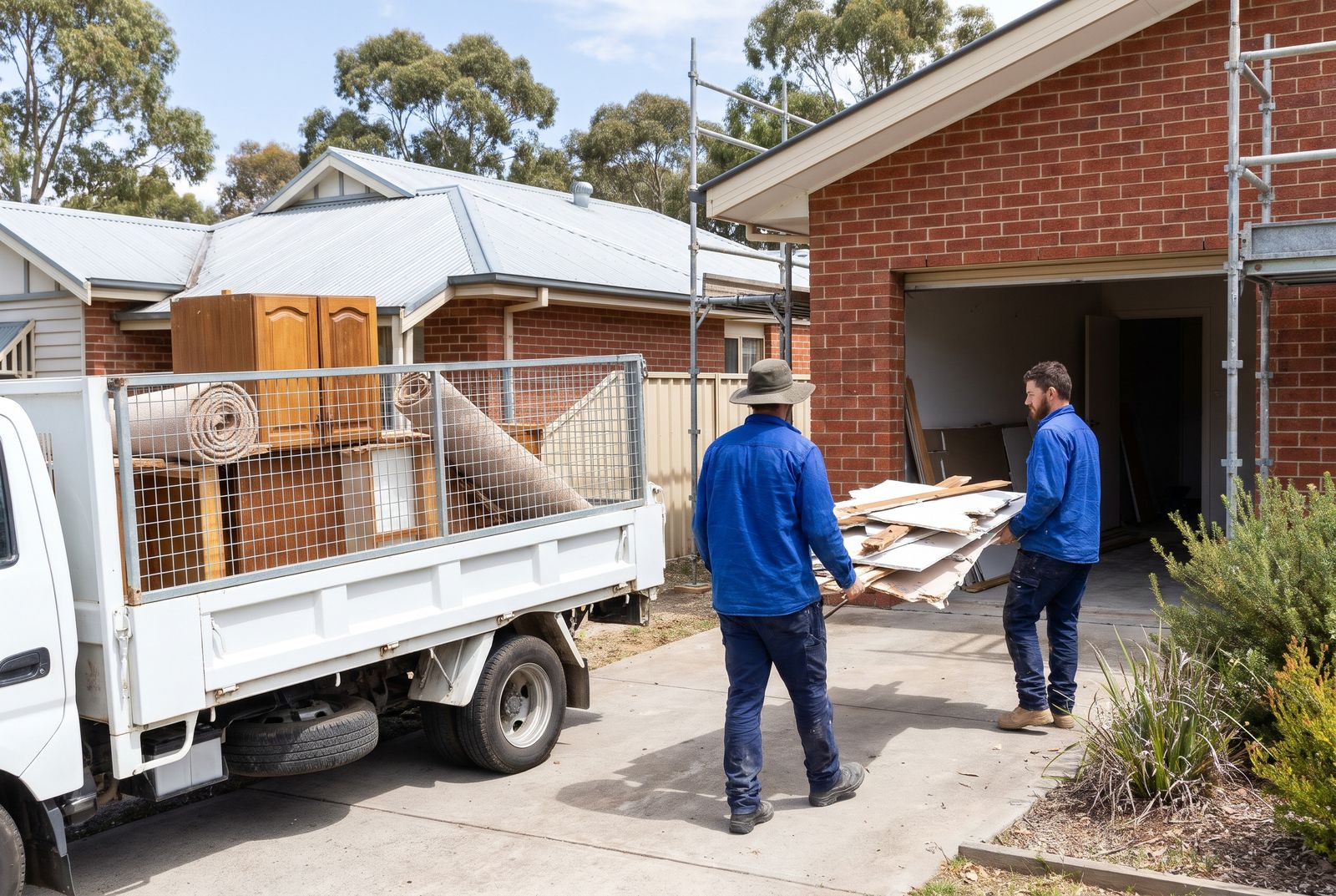
A crew loads it and takes it away
- Broken concrete carried out and loaded by hand
- Usually priced by weight, not by the space it takes
- Tip or recycling fees usually in the price
- A clean load usually priced lower than a mixed one
- Heavy loads can hit a truck's weight limit fast
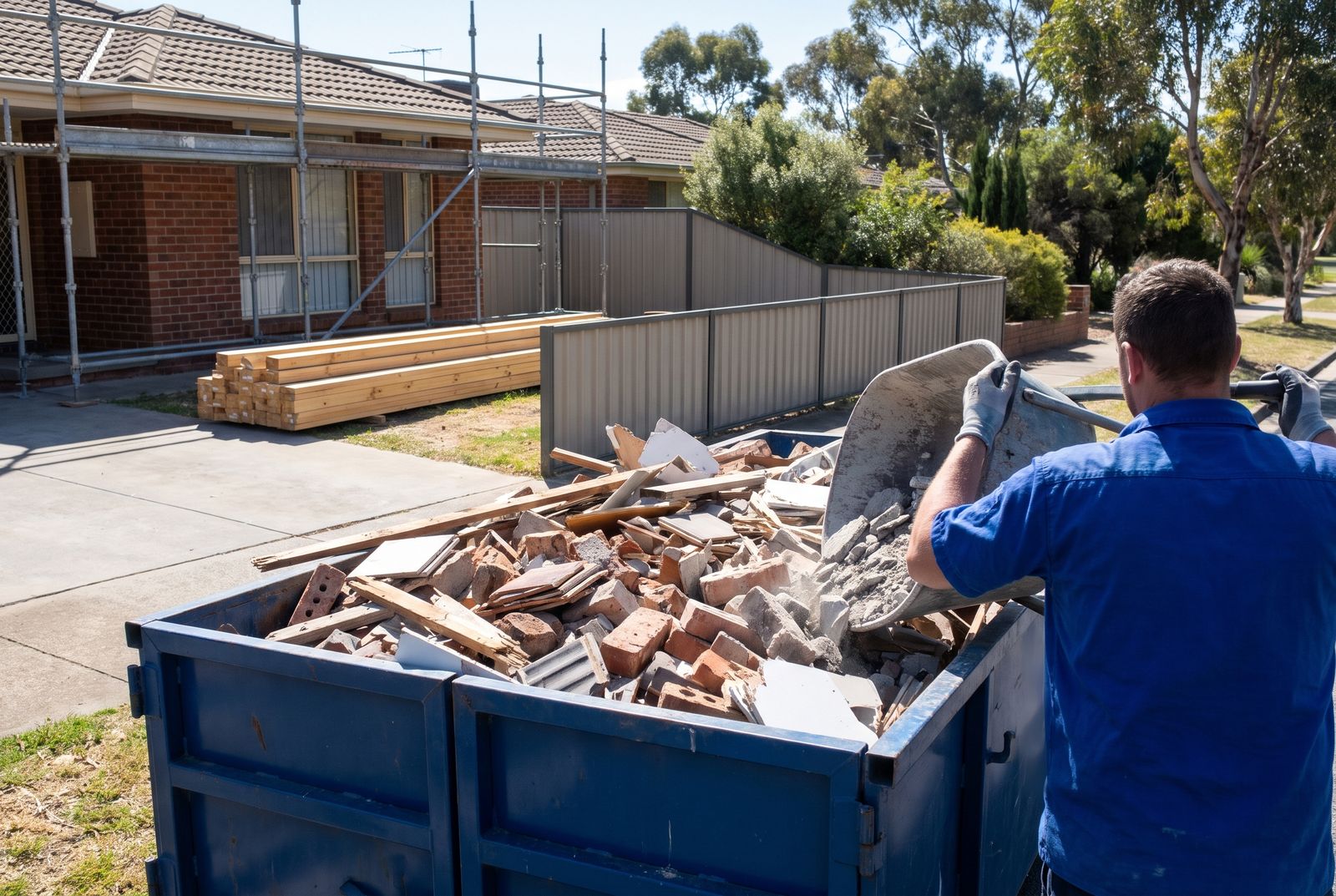
A concrete skip you fill yourself
- A heavy skip set aside for concrete
- You fill it while you break the concrete up
- Usually 2 to 6 cubic metres, smaller than general bins
- Filled no higher than the top edge
- Delivery, collection and tipping in the hire price
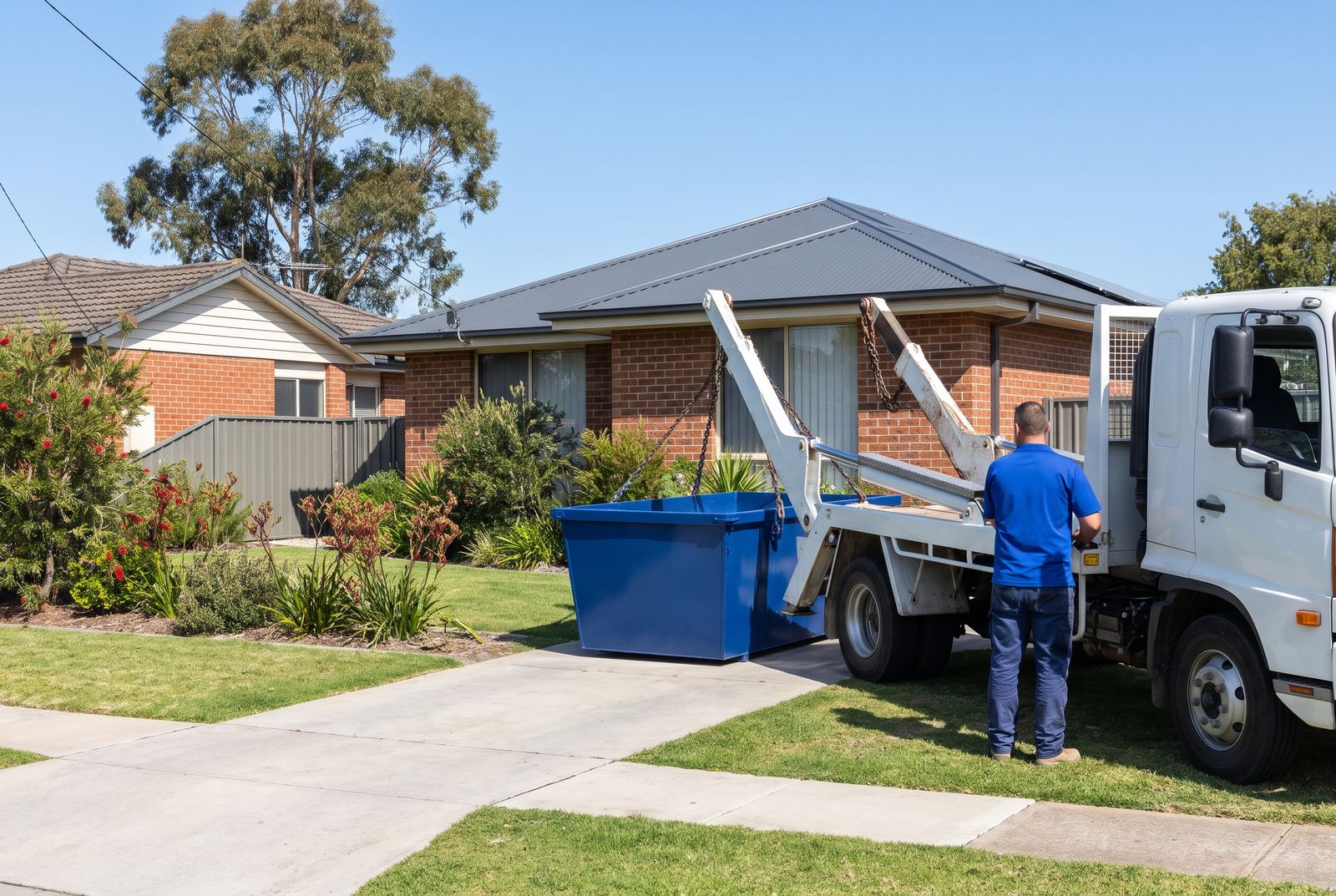
Skip delivery and pick-up
- Lowered by the truck onto a driveway or into a yard
- The truck needs clear width and height to lift
- A standard hire usually runs up to a week
- Extra days usually charged by the day
- Collected full and taken away for tipping
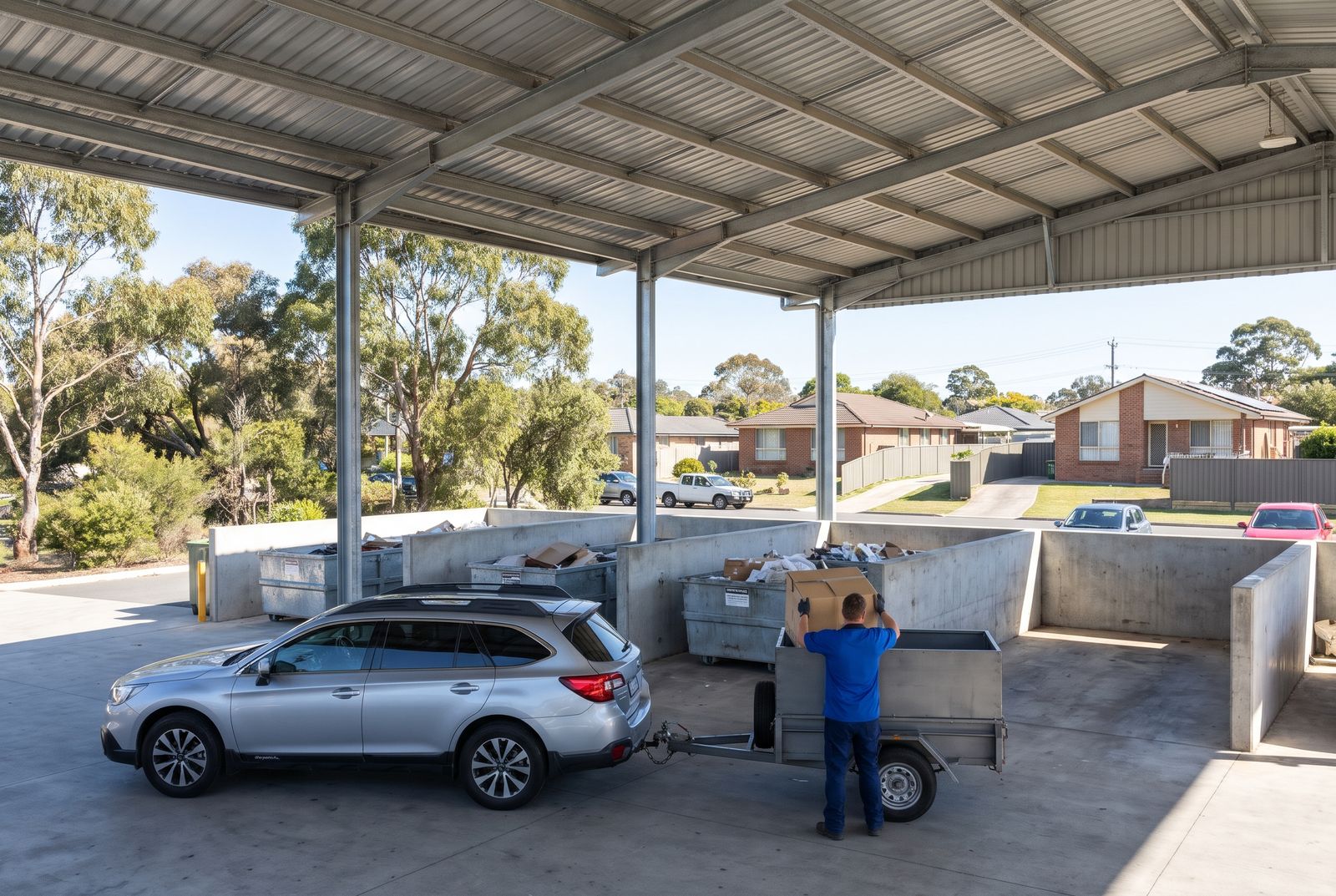
Taking it to a recycler yourself
- Many recyclers take clean concrete at the gate
- Usually charged by the cubic metre or by weight
- A load mixed with other rubbish costs more
- Small ute and trailer loads often pay a minimum
- You load and unload it yourself
Sometimes included
Some businesses include these and some do not. Check on the call.
- Concrete with reinforcing steel still in it
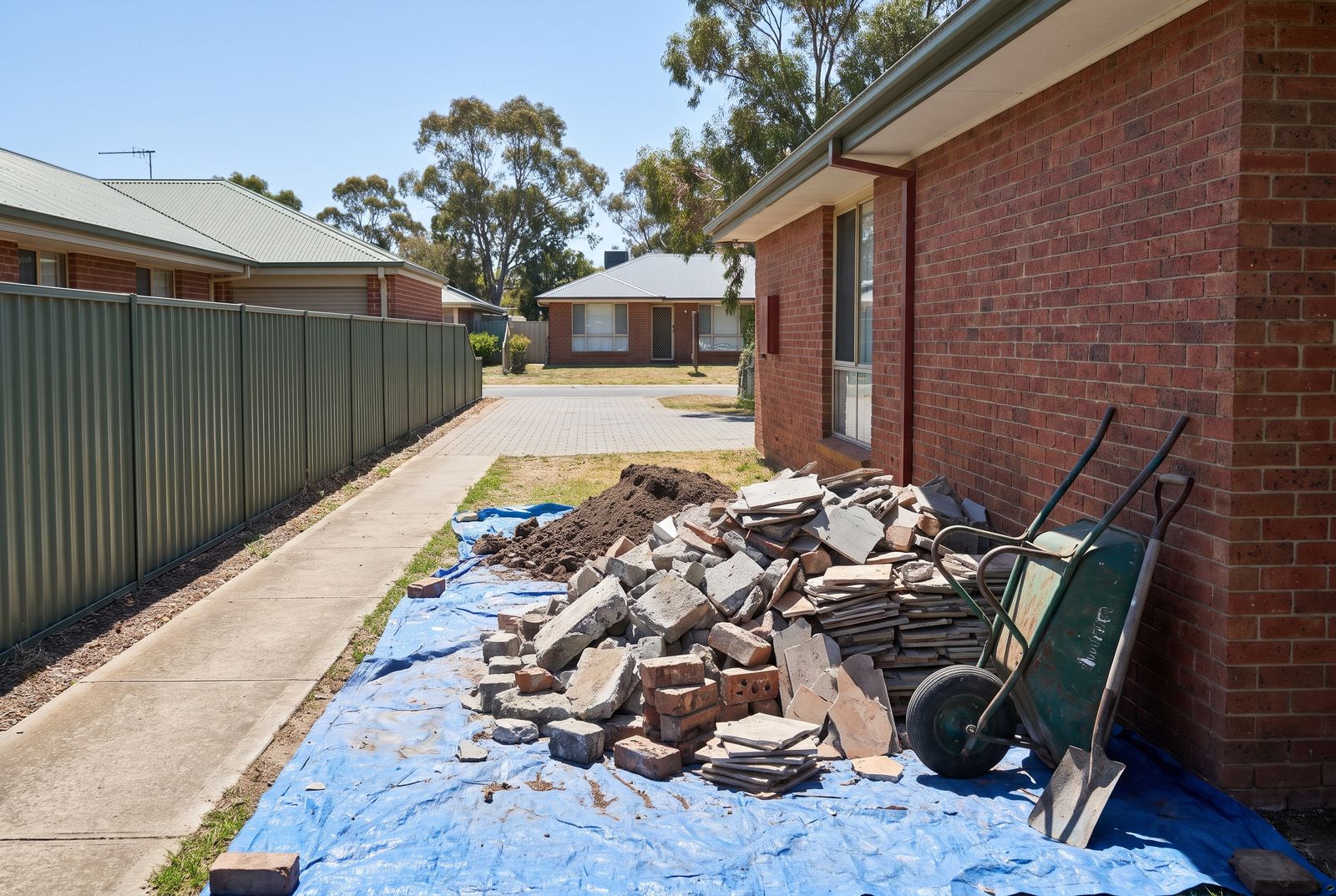
- Bricks, pavers or roof tiles mixed into the pile
- A small loader for a big pile
- The ground swept once the pile is gone
- A weighbridge or tip docket on request
Not part of concrete disposal
Most businesses leave these out of a concrete load or price them as a separate job. Mention any you have when you book.
- Asbestos, or old sheeting that might contain it
- Paint, liquids and chemicals of any kind
- Soil and clay, on many lists
- Timber, plasterboard and household rubbish
- Council fees for a skip on the street
Concrete disposal prices
Estimated concrete disposal prices in Australia
You can pay a recycler to take it, hire a skip and fill it yourself, or have a crew load it and take it away. Here is an estimate for each. Prices differ from one business to the next.
| How it goes | What you pay for | Estimated price |
|---|---|---|
| Recycler, per cubic metre | Gate fee for clean concrete you bring in | $10 to $40 |
| 2 cubic metre skip | About 3 tonnes when full. You fill it | $250 to $460 |
| Crew, per tonne | Loaded and taken away for you | $300 to $800 |
| 6 cubic metre skip | About 9 tonnes when full. You fill it | $420 to $810 |
Estimates only. The crew price is for broken concrete loaded by hand with easy access. The skip prices are for a concrete-only bin on a normal hire period, with delivery, collection and tip fees in. The recycler price is a gate fee for clean concrete only, and many recyclers set a minimum charge for a small load. Each business prices its own work. Estimates checked on 14 November 2026.
Rates and charges to ask about
Typical ranges for a skip booked for concrete.
- An extra day of skip hire$10 to $70 a day
- Weight over a skip's limit, where it has one$270 to $480 per tonne
- Bricks, tiles or soil in a concrete skip of up to 4 cubic metres$100 to $200 a bin
- A walk-in door on the skip$10 to $50
What moves the price
- WeightConcrete is so heavy that most prices follow its weight. One state government uses 1.5 tonnes as its default weight for a cubic metre of stockpiled concrete.
- How clean the load isClean concrete costs less to tip than a load with timber, plastic, soil or rubbish through it. Some recyclers charge more for a contaminated load, or turn it away.
- Steel and thicknessSome recyclers grade concrete by how thick it is and how much steel is in it, and charge more for footings and heavy reinforcing.
- Crew or skipA crew does the lifting and is priced by the tonne. For a big slab, a skip you fill yourself usually costs less for the weight it holds.
- AccessHeavy pieces carried up steps or along a side path take longer to load. A pile with a short, clear carry is the quickest to clear.
- Size of the pileA big pile can reach a truck's weight limit before the tray is full, so it may be priced as more than one load, or a skip may suit it better.
Concrete skip Tip fees Rubbish removal cost Builders waste removal
Which load
Clean concrete, concrete with steel, or mixed rubble: which do you have?
In Australia, what else is mixed into the concrete usually sets the price. Tell the business which one matches your pile.
Nothing else mixed in
Clean concrete
Broken slabs, paths, driveways and footings with no timber, plastic, soil or rubbish through them. It is the easiest heavy load to get rid of, and recyclers usually charge least for it at the gate.
Best for a slab, path or driveway you have broken up
Reinforcing mesh or bar
Concrete with steel in it
Many businesses and recyclers take concrete with the reinforcing still in it. Some recyclers grade it by how thick it is and how much steel it holds, and charge more for thick footings or heavy bar.
Best described with a photo of the broken edges
Concrete with bricks, tiles, soil or rubbish
Mixed rubble
Bricks, pavers and roof tiles are often taken with concrete. Soil, timber, plastic or household rubbish in the pile usually means a dearer mixed price, and some recyclers refuse a mixed load. Keep separate piles if you can.
Best split into separate piles before the pick-up
Other heavy and building waste jobs
Weight
How much broken concrete weighs, next to soil and timber
Weight is what sets a concrete price. These are the Queensland Government's default figures for stockpiled waste, worked out for a small, a medium and a large pile, with soil and timber beside concrete to compare.
| What is in the pile | Tonnes a cubic metre | A 1 cubic metre pile, about | A 2 cubic metre pile, about | A 6 cubic metre pile, about |
|---|---|---|---|---|
| Concrete | 1.5 | 1.5 tonnes | 3 tonnes | 9 tonnes |
| Soil, sand and clean fill | 1.3 | 1.3 tonnes | 2.6 tonnes | 7.8 tonnes |
| Timber and wood | 0.19 | 190 kilograms | 380 kilograms | 1.14 tonnes |
Worked out from the default factors the Queensland Government gives waste site operators as a general guide. These are not weighed loads, and a pile of broken pieces can weigh less or more. Read on 13 November 2026: Queensland Government, Volumetric surveys.
Concrete can reach a truck's weight limit long before the tray is full. Say roughly how much there is when you book, so the business sends the right truck or suggests a skip.
How it works
How concrete disposal works with Take My Clutter
- 1Tell us what needs to go
Four quick questions: what it is, how soon, where it is and who to call.
- 2We match it to a local specialist
Your job goes to one local rubbish removal or skip bin business that works in your area.
- 3They get back to you within the hour
They talk the job through with you and give you a quote.
- 4You decide
Like the quote? Book it in with them directly.
On the day
What happens when a crew collects your concrete
The usual steps of a concrete collection, from sizing up the pile to the loaded truck pulling out.
Usually two people come with a tipper or caged truck. Concrete is so heavy that a truck can reach its weight limit before the tray looks full.
Most crews check what the pile is and roughly how much it weighs before they lift anything. Point out any steel, brick or soil in it.
When there is more concrete than your photos suggested, most crews re-price it before they start lifting. Leaving part of the pile for another trip is usually an option.
Pieces are usually lifted into the truck by hand. For a big pile, some businesses bring a small loader or suggest a skip instead.
Slabs too big or heavy to lift safely may need breaking up first. Ask before the day whether yours do, and to what size.
Many crews give the spot a sweep once the concrete is gone. If your builder or landlord wants a record, ask for the weighbridge or tip docket.
Before they arrive
Six things to do before your concrete is collected
A little prep gets you a closer price and a quicker pick-up.
- 1Work out the volume
Multiply length by width by thickness, in metres. A path 10 metres long, 1 metre wide and 100 millimetres thick is 1 cubic metre of concrete.
- 2Send photos
Photograph the pile from two sides with a wheelie bin or a person beside it for scale, and the path a truck would use to reach it.
- 3Say what is in it
Tell the business whether it is concrete only, concrete with steel, or mixed with bricks, tiles or soil. Each one can be priced differently.
- 4Keep it clean
Keep timber, plastic, soil and household rubbish out of the concrete pile. A clean load usually costs less to tip.
- 5Set old sheeting aside
The national asbestos agency says most people cannot tell if a material contains asbestos by looking at it. Keep any old sheeting out of the pile.
- 6Make it easy to reach
Pile the pieces in one place, with nothing in the way. Mention steps, slopes and narrow gates when you book.
Before you book
Questions to put to a business before a concrete pick-up
Six questions to ask first, so the price on the day matches the price you were given.
How will you work out the weight?
Concrete is usually priced by weight. Ask how the business works out what your pile weighs, and what happens if it comes in heavier.
Does steel change the price?
Some recyclers charge more for thick footings or heavy reinforcing. Ask whether your load costs more with the bar or mesh left in.
What else can go in the same load?
Pavers, bricks and roof tiles are often fine. Ask about soil, rock and anything else before it goes on the pile.
How small do the pieces need to be?
Ask whether slabs need breaking up before the crew comes, and how big a piece they can lift.
How much fits in one trip?
A truck can reach its weight limit before the tray is full. Ask how much concrete one trip takes, and what a second trip costs.
Is there paperwork for the load?
Ask for the weighbridge or tip docket once the concrete is gone. A builder or landlord may want to see it.
A crew or something else
A crew, a concrete skip or a recycler: which suits your concrete
Paying a crew is only one way to get broken concrete off your property. These are the four usual options and when each makes sense.
Book a crew to load it
A crew lifts the concrete and takes it away in one visit. It suits a pile you have already broken up, or a site with no room for a bin.
Get a concrete disposal quoteHire a concrete skip
You fill a heavy bin while you break the slab up, and it is collected when you are done. It suits a bigger job you do over several days.
Concrete skipDrop it at a recycler or tip
With a ute or trailer you load it, drive it in and pay a gate fee. Check that your nearest one takes concrete, and how much weight your trailer is built to carry.
Find a tip near youConcrete mixed with other building waste
When timber, plasterboard and other renovation waste are in the pile too, a builders waste crew can take the lot.
Builders waste removalWhere we cover
Rubbish removal near you, by state and city
There is no separate concrete disposal page for each suburb. Choose your state or city to see what rubbish removal costs locally, when the council collects and where the nearest tips are.
Questions
Concrete disposal in Australia: your questions answered
Straight answers on price, weight, steel, recyclers and what happens on the day.
How much does concrete disposal cost in Australia?
As an estimate, a crew that loads broken concrete and takes it away charges $300 to $800 a tonne. A 2 cubic metre concrete skip you fill yourself is $250 to $460, and clean concrete you take to a recycler is often $10 to $40 a cubic metre at the gate. Prices vary by business.
Why is concrete priced by weight?
Because of how heavy it is. One state government uses 1.5 tonnes as the default weight of a cubic metre of stockpiled concrete, so even a small pile weighs more than it looks. Tips and recyclers charge heavy loads by weight or by the cubic metre, and a crew's truck can reach its weight limit long before the tray is full.
How heavy is my concrete?
Work out the volume in cubic metres and multiply it by 1.5, the default tonnes a cubic metre that one state government uses for concrete. A 2 cubic metre pile comes to about 3 tonnes. The figure is a general guide, and a loose pile of broken pieces can weigh less or more.
Can I take concrete to a recycler or the tip myself?
Yes. Many recyclers and some tips take clean concrete at the gate, charged by the cubic metre or by weight. As an estimate it is $10 to $40 a cubic metre for clean concrete. Small ute and trailer loads often pay a minimum charge, and a load mixed with other rubbish costs more or may be turned away. Check what your nearest one takes first.
Can bricks, tiles or soil go with the concrete?
Often, for bricks, pavers and roof tiles, which many recyclers accept in a concrete load. Soil is another matter. Many businesses keep soil out of a concrete load or price it as mixed rubble, which costs more. Timber, plastic and household rubbish belong in a separate pile.
What if I think the pile has asbestos in it?
Keep the suspect material apart and get advice. The national asbestos agency says most people cannot tell if a material contains asbestos just by looking at it, and only testing a sample can confirm it. It also says asbestos waste may only be disposed of at a licensed facility, and illegal disposal, such as tipping it into a home rubbish bin or a skip, carries big penalties.
How much concrete can a crew take in one trip?
It depends on the truck. Concrete can reach a truck's weight limit long before the tray is full, so some businesses cap how much rubble they take in one trip or charge more above about a cubic metre. For a big slab or driveway, some suggest a skip instead.
Do I need to break the concrete up first?
Usually, yes. Most crews load by hand, so pieces need to be small enough to lift safely. Ask before the day how big the pieces can be. A recycler may also charge more for thick or oversized pieces.
How do I know the concrete is disposed of properly?
The business you are matched with is licence checked and insured. Before the truck leaves, ask which recycler or tip the concrete is going to, then ask for the docket afterwards, most of all if a builder or landlord needs the paperwork.
How does Take My Clutter fit in?
You tell us the job, and we pass it to one local rubbish removal business that we have checked. They get back to you within the hour with a quote, and you decide whether to book with them.
Guides and tools
Concrete and heavy waste guides and tools
Official sources
Checked on 14 November 2026. Rules and fees change, so check the official page before you book.
- Queensland Government, Volumetric surveys: converting volume to weight
- Asbestos and Silica Safety and Eradication Agency, Asbestos identification, removal and disposal
Ready to clear the concrete?
Tell us how much there is. A local specialist gets back to you within the hour.