

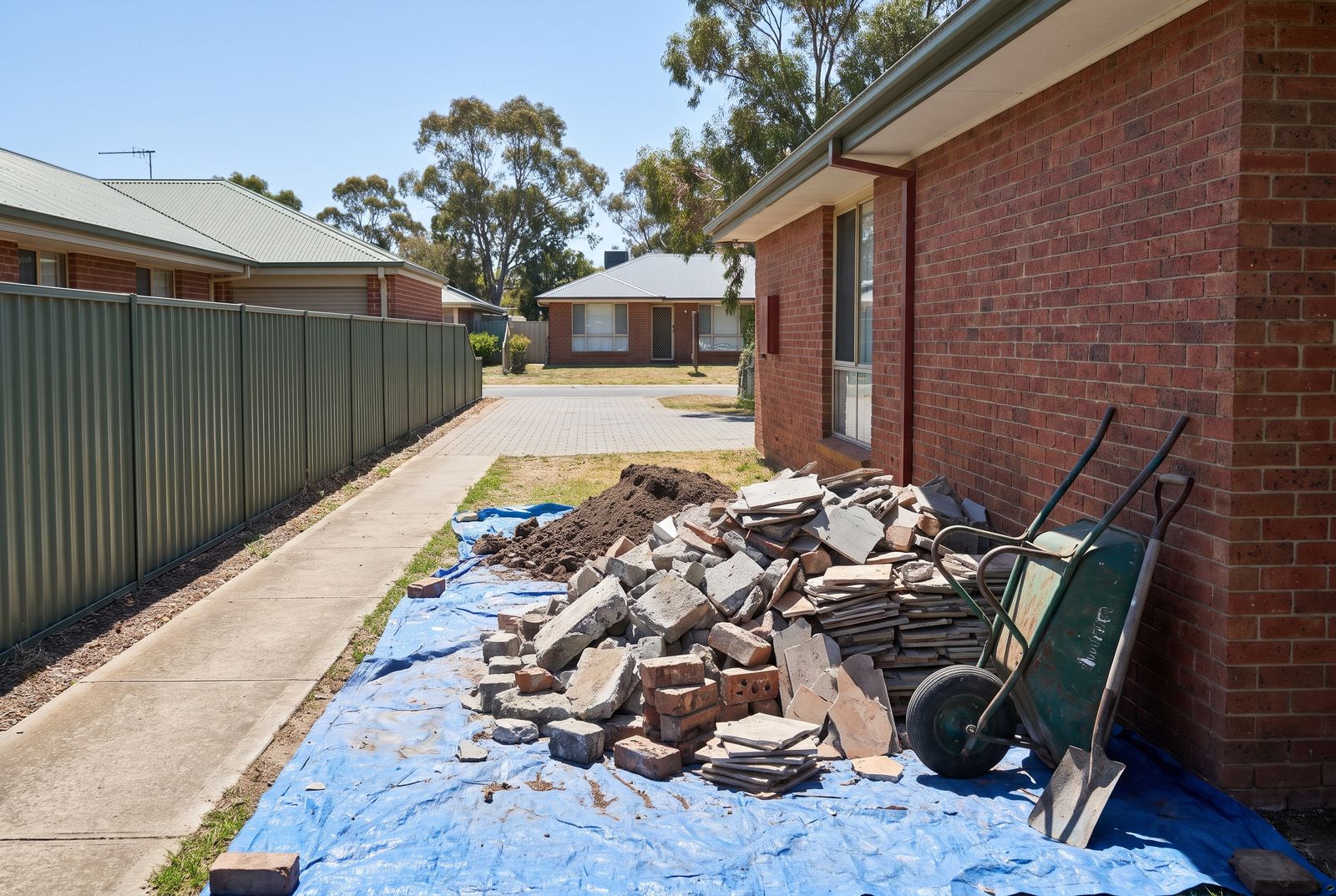
Concrete skip
Concrete to get rid of? A local skip business gets back to you within the hour.
Tell us what is going in the bin and where you are. One local skip business gets in touch.
- Licence checked and insured
- Verified by Take My Clutter
- Matched with a skip bin hire specialist
4.8
Collective Google Rating
From 500+ reviews
Who gets your job
Checked before they get your job
A local business gets back to you within the hour.
We check each business's licence before it gets jobs.
Every business we pass jobs to is insured.
Only verified businesses get your job.
What you get
What concrete skip hire typically covers
A concrete skip is a steel skip bin booked for concrete, which is too heavy for a general bin. Every skip company works its own way, so confirm the details when they call.
The bin and delivery
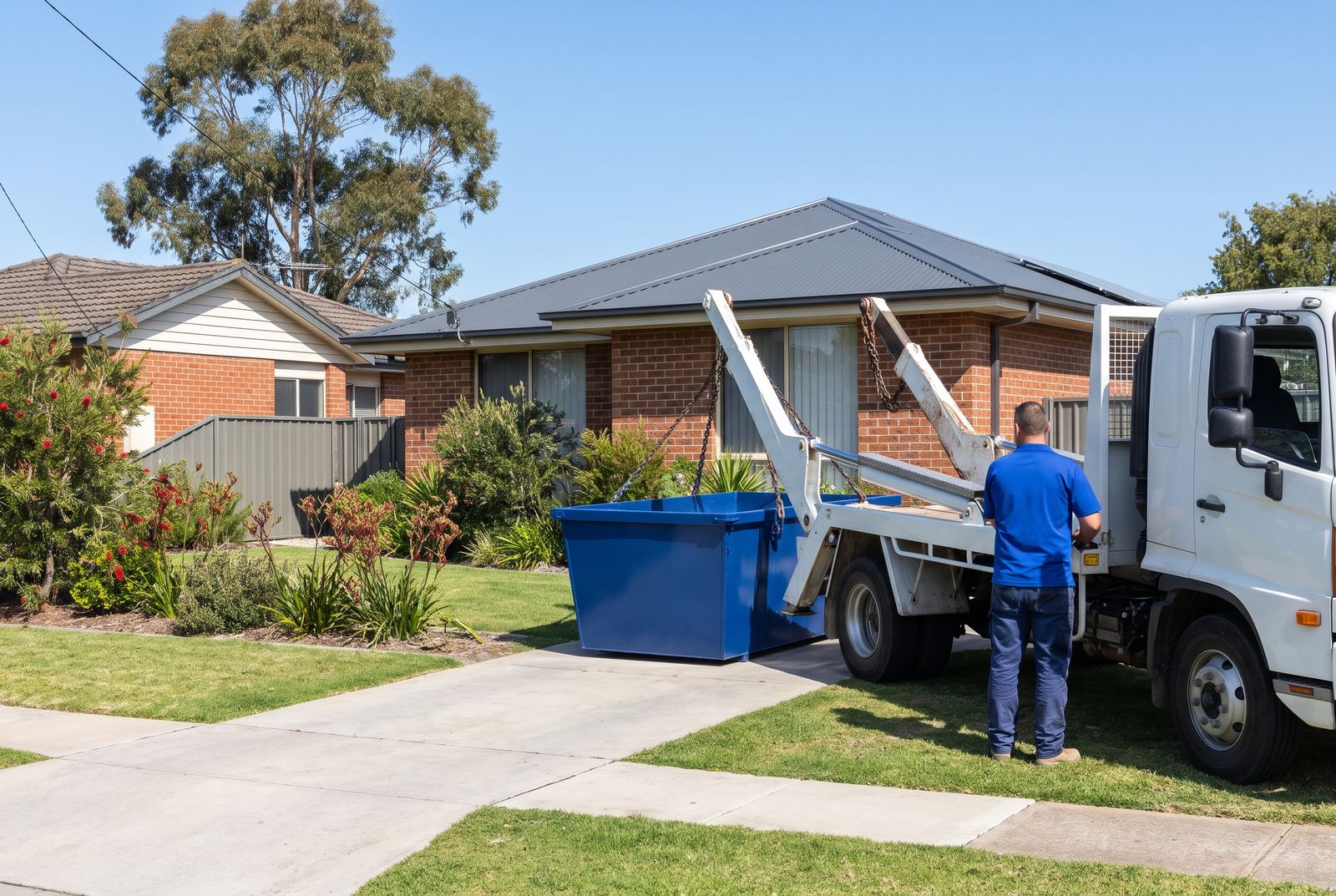
- A steel skip booked for concrete
- Lowered off the back of the truck on chains
- Set down on your driveway or in your yard
- The driver has the final say on a safe spot
Loading it
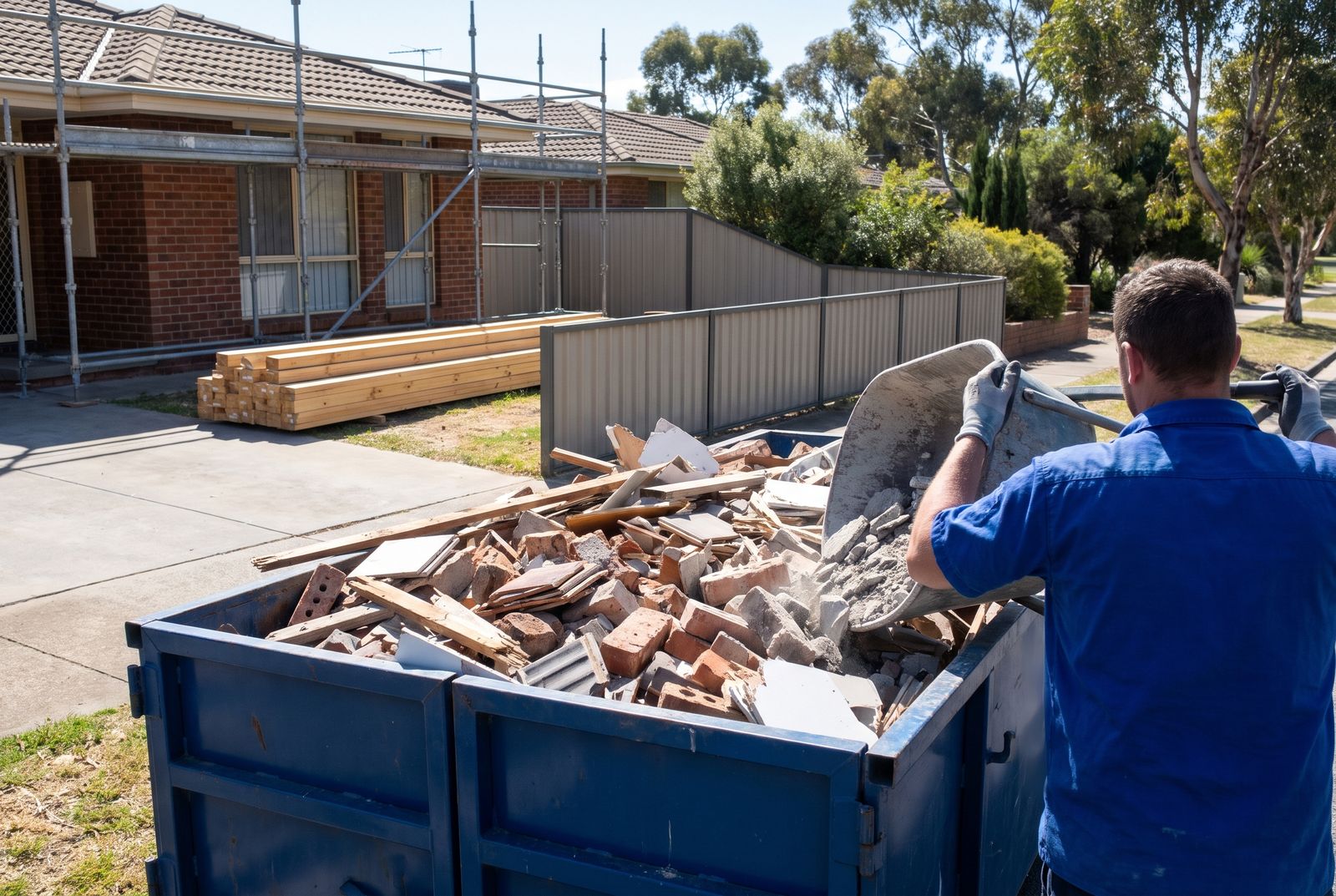
- Fill it at your own pace over the hire
- A door for a wheelbarrow on some bins
- Loading by machine allowed on some bins
- Load it level with the rim and no higher
Sizes and hire
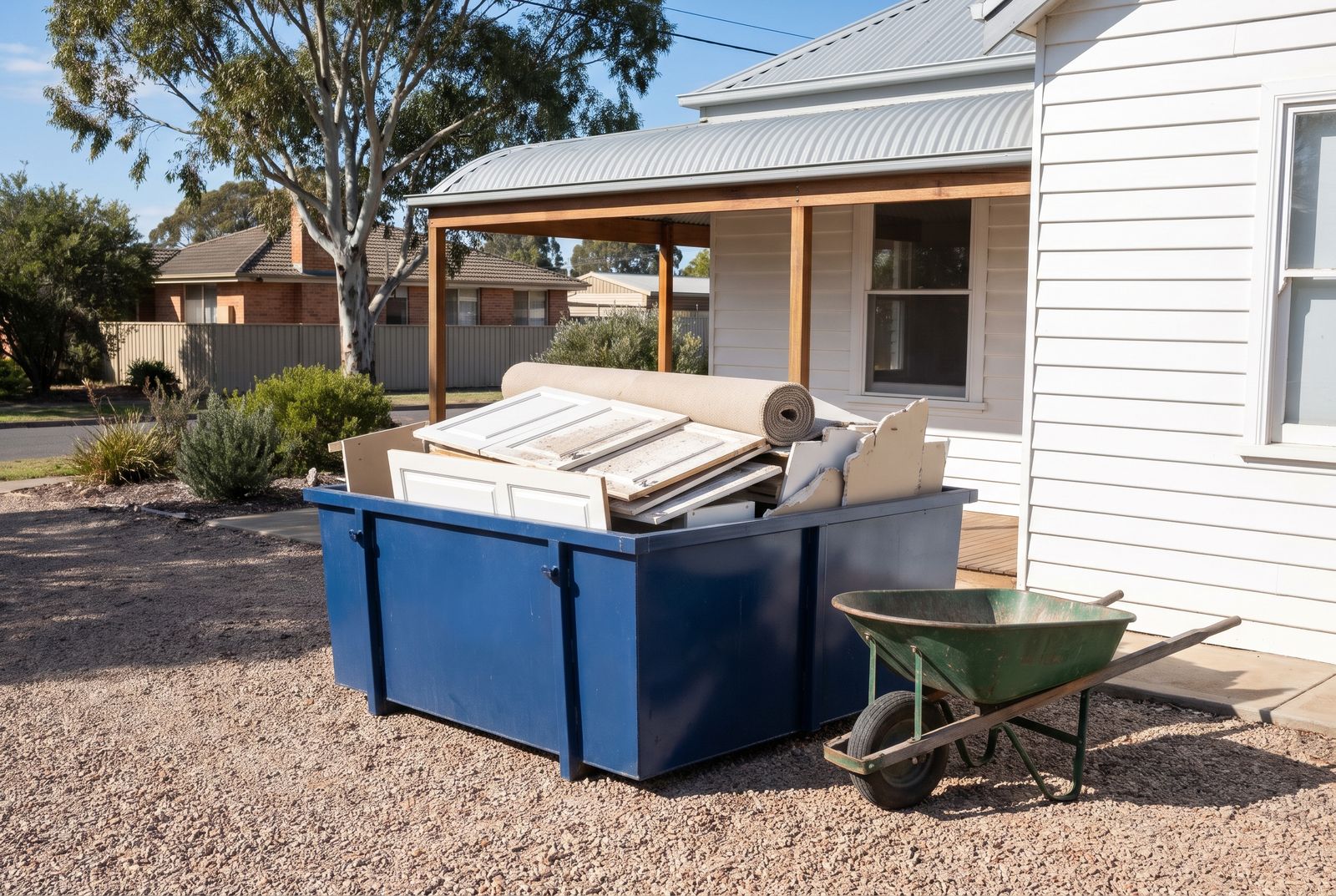
- Common sizes of 2, 3, 4 and 6 cubic metres
- A standard hire of 3 to 7 days, most often 7
- Extra days usually available at a daily rate
- Smaller top sizes than general bins, because of weight
Pick-up and tipping
- The full bin lifted back on by the same truck
- Tip fees for a load of clean concrete
- A check that the load is level and clean
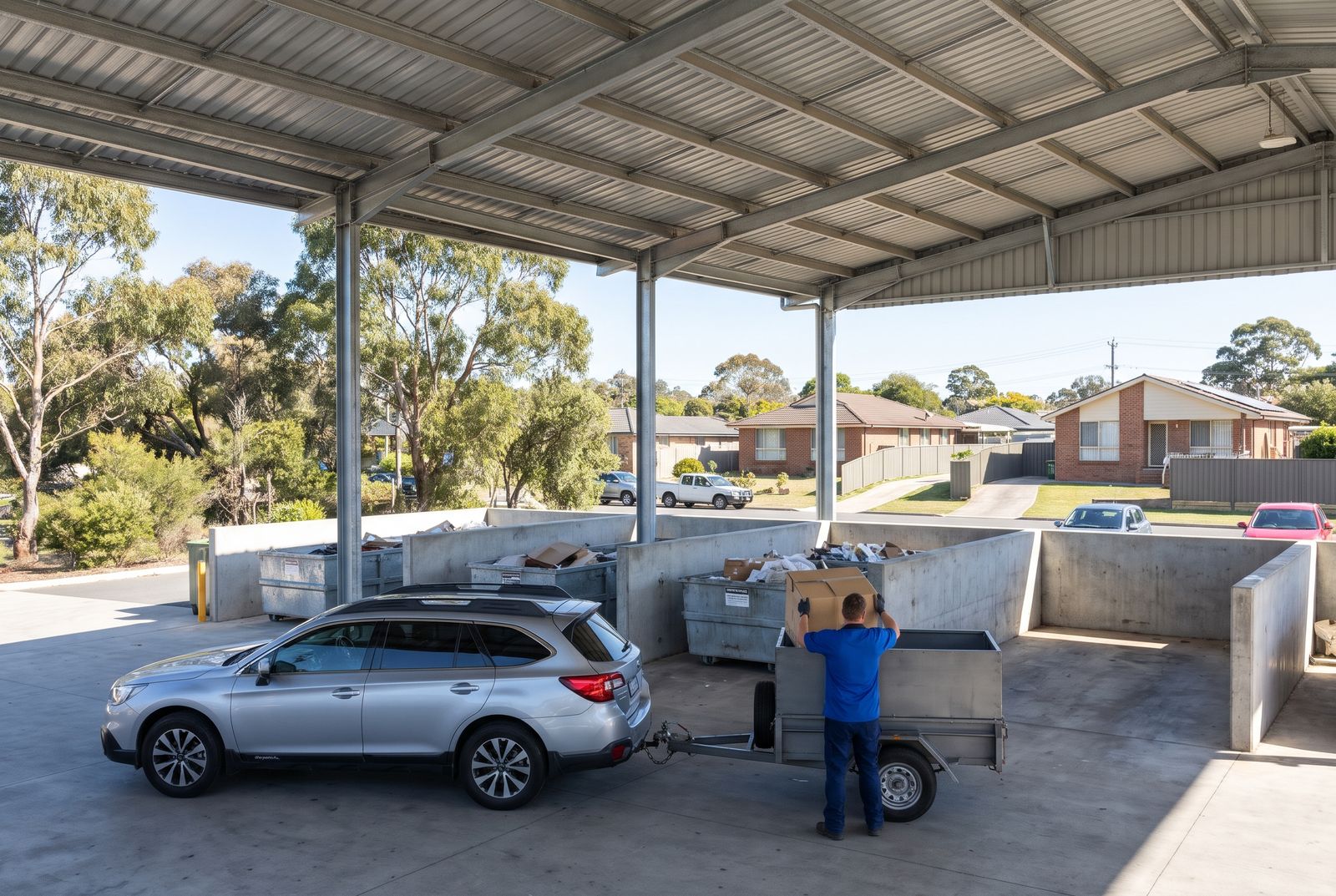
- No trailer trips to the tip
Sometimes included
On some companies' lists and not others. Ask when you book.
- No weight limit on a concrete bin
- Reinforcing steel left in the concrete
- Bricks, pavers and roof tiles in the same bin
- A drop-down door for a wheelbarrow
- Loading by machine
Not part of concrete skip hire
These are left out of a concrete skip, or need a different job.
- Breaking up or loading the concrete for you
- Soil, clay and dirt, on many lists
- Timber, plasterboard and green waste
- Household rubbish
- Asbestos in any form
- Council permit fees for a bin on the street
Concrete skip sizes
Concrete skip sizes and what each one weighs when full
Concrete skips are sized in cubic metres. These four sizes are the ones most businesses hire for concrete. The drawings are to scale with each other by volume.
2 cubic metres
About 3 tonnes of concrete
Suits broken pavers or a small slab
3 cubic metres
About 4.5 tonnes of concrete
The next size up when 2 is too tight
4 cubic metres
About 6 tonnes of concrete
Often has a door for a wheelbarrow
6 cubic metres
About 9 tonnes of concrete
The biggest heavy bin on many lists
The weights are for a full bin, worked out from the Queensland Government's default figure for stockpiled concrete, 1.5 tonnes a cubic metre. A loose load can weigh less or more. Broken concrete takes up more room than the slab it came from, so if you are between two sizes, go up one.
Skip bin sizes guide What size skip do I need? Concrete disposal Skip bin hire
Concrete skip prices
Estimated concrete skip prices in Australia
Concrete skips are priced by size, in cubic metres, and by how clean the load is. These are estimates of what to expect for a bin booked for concrete. Every business sets its own price.
| Bin size | Weight when full | Estimated price |
|---|---|---|
| 2 cubic metres | About 3 tonnes of concrete | $250 to $460 |
| 3 cubic metres | About 4.5 tonnes of concrete | $350 to $610 |
| 4 cubic metres | About 6 tonnes of concrete | $400 to $710 |
| 6 cubic metres | About 9 tonnes of concrete | $420 to $810 |
Estimates only, for a bin booked for concrete on a standard hire of up to a week, with delivery, pick-up and tipping. A load of clean concrete only is usually at the low end, and a bin that also takes bricks, tiles or soil is usually at the high end. The weights are worked out from a state government's default figure for concrete, 1.5 tonnes a cubic metre. A loose load can weigh less or more. Every business sets its own price. Estimates checked on 14 November 2026.
Common extra charges
Typical range for each.
- An extra day of hire$10 to $70 a day
- A walk-in door on the bin$10 to $50
- Weight over the limit, where the bin has one$270 to $480 per tonne
- Bricks, tiles or soil mixed in, on a bin up to 4 cubic metres$100 to $200 a bin
What moves the price
- Bin sizeSize sets most of the price. Concrete bins usually stop at smaller sizes than general bins, because of the weight.
- How clean the load isClean concrete only usually costs less than any other heavy load. Bricks, tiles or soil mixed in often move the bin to a dearer mixed heavy price.
- WeightSome businesses set no weight limit on a concrete bin. Others include a set number of tonnes and charge for weight above it.
- Size of the piecesA business may charge more for large pieces of concrete. Ask whether slabs need breaking up first, and to what size.
- Hire lengthA standard hire is usually 3 to 7 days. Extra days usually cost $10 to $70 each, so book the time you expect to need.
- Where the bin sitsA bin on your own driveway usually needs no permit. On the road or nature strip, many councils require a permit and set their own fee. Check with your council.
Skip bin sizes and prices 4 cubic metre skip bin price 6m skip bin price Skip bin hire cost
Which heavy bin
Concrete only, concrete and brick, or mixed heavy: which bin do you need?
Skip companies in Australia price a heavy bin by what goes in it. The cleaner the load, the cheaper the bin usually is.
Clean concrete
Concrete only skip
For slabs, paths, driveways and footings with nothing else mixed in. Many businesses accept the reinforcing steel left in the concrete. A clean load usually costs less than any other heavy bin, and it sits at the low end of the estimates above.
Best for breaking up a slab, path or driveway
Concrete, bricks, pavers, roof tiles
Concrete and brick skip
Many businesses run one bin for concrete, bricks, pavers and roof tiles together. Some price it the same as concrete only. Others charge a mixed heavy price once bricks or tiles go in. Soil is often kept out of it.
Best for a wall, paving or roof tile job
Rubble with soil or other waste
Mixed heavy waste skip
For concrete mixed with soil, clay, rock or other rubble. It usually costs more than a clean concrete bin of the same size, and it sits at the high end of the estimates above. A concrete bin with the wrong material in it is usually charged at this price.
Best for digging out and demolition rubble
More kinds of skip
Weight
How much a full skip weighs, by what is in it
Weight is why concrete gets its own bin. This is what a full bin comes to on the Queensland Government's default figures for each kind of heavy waste, with mixed building waste to compare.
| What is in the bin | Tonnes a cubic metre | A full 2 cubic metre bin, about | A full 4 cubic metre bin, about | A full 6 cubic metre bin, about |
|---|---|---|---|---|
| Concrete | 1.5 | 3 tonnes | 6 tonnes | 9 tonnes |
| Soil, sand and clean fill | 1.3 | 2.6 tonnes | 5.2 tonnes | 7.8 tonnes |
| Bricks | 1.2 | 2.4 tonnes | 4.8 tonnes | 7.2 tonnes |
| Mixed building waste | 0.7 | 1.4 tonnes | 2.8 tonnes | 4.2 tonnes |
Worked out from the Queensland Government's default factors for stockpiled waste, which it publishes as a general guide for waste sites. A loose load in a skip can weigh less or more. Read on 13 November 2026: Queensland Government, Volumetric surveys.
Some concrete bins have no weight limit. Others carry a limit below what a full bin weighs on these figures, such as 5 tonnes on a 6 cubic metre bin. Ask what the limit is before you fill the bin.
What goes in
What can and cannot go in a concrete skip
Every skip business has its own list, so say what the load is when they call. This is what most published lists say for a concrete bin.
Usually fine in a concrete skip
- Concrete slabs, paths, driveways and footings
- Concrete with reinforcing steel still in it, on many lists
- Bricks, pavers and roof tiles, on many lists
Ask first, often a dearer mixed price
- Soil, clay and dirt
- Rock and other rubble
- Large pieces of concrete
Almost always refused
- Timber, plasterboard and green waste
- Household rubbish
- Asbestos in any form
A concrete skip is priced for a clean load. If other material goes in, the load is usually charged as mixed heavy or mixed general waste, which costs more.
Can it go in a skip? Check an item Soil removal Asbestos skip bin Skip bin hire
How it works
How concrete skip hire works with Take My Clutter
- 1Tell us what needs to go
Four quick questions: what it is, how soon, where it is and who to call.
- 2We match it to a local specialist
Your job goes to one local rubbish removal or skip bin business that works in your area.
- 3They get back to you within the hour
They talk the job through with you and give you a quote.
- 4You decide
Like the quote? Book it in with them directly.
On the day
How a concrete skip is delivered, filled and collected
What usually happens between the truck arriving and the full bin leaving.
Drivers usually deliver in a morning or afternoon window, not at a set time. You often do not need to be home if the spot is clearly marked and the driveway is clear.
The truck reverses up to the spot and lowers the bin off the back. It needs about 3 metres of width and 4 to 5 metres of height, clear of power lines, trees and carports.
Lift pieces over the side, or open the door if the bin has one and wheel a barrow in. Some bins may be loaded by machine. Ask first.
Put only what you booked for in the bin. Timber, plasterboard, green waste or household rubbish in a concrete bin usually means a dearer mixed price.
Keep the load level with the rim. Concrete piled above it can make the bin unsafe to lift, and most drivers will not take it until the extra comes off.
The driver checks the load is level and has no banned items, then lifts the bin back onto the truck. A full concrete bin weighs several tonnes.
Before they arrive
Six things to sort before a concrete skip arrives
A few checks before delivery day head off the charges and hold-ups that catch people out.
- 1Measure the concrete
Multiply the length by the width by the thickness, in metres. A slab 5 metres by 4 metres and 100 millimetres thick is 2 cubic metres.
- 2Allow for broken pieces
Broken concrete takes up more room than the slab it came from. If you are between two sizes, go up one.
- 3Name what is going in
Tell the business exactly what the load is: concrete only, concrete with steel in it, or concrete with bricks, tiles or soil. Each can be a different price.
- 4Ask about weight
Ask whether the bin has a weight limit, what it is and what weight above it costs. Some concrete bins have no limit and some do.
- 5Clear the way in
Skip trucks need about 3 metres of width and 4 to 5 metres of height. Move cars, open gates and mention steep driveways, low carports, trees and power lines when you book.
- 6Protect the driveway
A loaded skip is heavy. Lay timber boards or old ply where it will sit if the surface is pavers, thin concrete or a decorative finish.
Before you book
What to ask before you book a concrete skip
Six questions that head off most surprises on price.
What can go in?
Ask whether the bin is for concrete only or takes bricks, pavers and roof tiles too, and whether soil is allowed.
Can the steel stay in?
Many businesses accept reinforcing mesh or bar left in the concrete. Some do not, so ask.
Is there a weight limit?
Some concrete bins have no limit. Others include a set number of tonnes. Ask what it is and what weight above it costs.
How big can the pieces be?
A business may charge more for large pieces. Ask whether slabs need breaking up first, and to what size.
What if the load is not clean?
Ask what the mixed price is for your size, so you know the cost if bricks, soil or other rubbish end up in the bin.
Will the truck fit?
The truck reverses up to the spot and lifts the bin off the back. Describe the driveway, gates, slopes and any trees or power lines overhead.
Council permits
Concrete skip permits: when a bin on the street needs one
It depends on where the skip sits and on your council.
Your own land
On your own land, usually no permit
A concrete skip on your own driveway or yard usually needs no permit, so put it there if it fits.
The street
Many councils want a permit first
On the road, footpath or nature strip, many councils require a permit or approval first, and some do not allow a skip there at all. Check with your council before you book.
Who applies
Ask who applies for the permit
Some skip businesses apply for the permit and pass on the fee, and others leave it to you. Ask when they call, and allow for the fee and the wait.
Rules and council services differ from place to place. Your state page has the detail: New South Wales, Victoria, Queensland, Western Australia, South Australia, Tasmania, Australian Capital Territory, Northern Territory.
Concrete skip or something else
A concrete skip, a crew or the tip: which suits the job
A concrete skip is one of four common ways to get rid of concrete. Here is when each one fits.
Hire a concrete skip
You fill it as you break the concrete up, and it stays at your place until the work is done. It suits a job you are doing yourself over several days.
Get a skip quoteBook a concrete disposal crew
A crew does the loading and takes the concrete away. It suits a pile that is already broken up, or pieces you cannot lift.
Concrete disposalBook builders waste removal
When the job also makes timber, plasterboard and other building waste, a crew can load the lot.
Builders waste removalTake it to the tip
Got a trailer or a ute? The tip or transfer station takes most household loads for a gate fee. Check that yours takes concrete, and mind the weight a trailer can carry.
Find a tip near youWhere we cover
Concrete skips and skip bin hire by state and city
Pick your state or city for council rules, tips and skip bin hire near you. A concrete skip is booked the same way as any other skip.
Questions
Concrete skips in Australia: your questions answered
Straight answers on price, what can go in, weight and size.
How much does a concrete skip cost in Australia?
As an estimate, a skip booked for concrete runs $250 to $460 for 2 cubic metres, $400 to $710 for 4 cubic metres and $420 to $810 for 6 cubic metres on a standard hire. Clean concrete only is usually at the low end. Bricks, tiles or soil in the load, extra days and a council permit can add to it, and every business sets its own price.
What is a concrete skip?
A steel skip bin booked for concrete. Concrete is far heavier than household rubbish, so it is kept out of general bins and priced on its own. Many businesses take bricks, pavers and roof tiles in the same bin, and some charge a mixed price once anything but concrete goes in. Say exactly what the load is when you book.
Can concrete go in a normal skip bin?
Not usually. Most general household bins do not allow concrete, bricks, tiles or soil. A general bin also usually has a weight limit, and published limits start at 300 kilograms for a 2 cubic metre bin, which concrete passes many times over. Book a bin for concrete or heavy waste.
How heavy is a skip full of concrete?
Heavier than most people expect. A state government's default figure for stockpiled concrete is 1.5 tonnes a cubic metre, so a full 2 cubic metre bin is about 3 tonnes and a full 4 cubic metre bin about 6 tonnes. On the same figures, bricks are 1.2 tonnes a cubic metre and soil 1.3. A loose load in a skip can weigh less or more.
Is there a weight limit on a concrete skip?
It depends on the business. Some set no weight limit on a concrete bin. Others include a set weight, such as 2 tonnes on a 2 cubic metre bin or 5 tonnes on a 6 cubic metre bin, and charge for weight above it. Ask what the limit is before you fill the bin.
Does the reinforcing steel have to come out?
Usually not. Many businesses accept concrete with the reinforcing mesh or bar still in it. Some do not allow steel in a concrete bin, and a business may charge more for large pieces, so ask when you book.
Can bricks, tiles or soil go in with the concrete?
Bricks, pavers and roof tiles often can, because many businesses run one bin for concrete and bricks. Soil is different. Many lists keep soil and dirt out of a concrete bin, and some businesses charge a higher mixed price as soon as bricks, tiles or soil are in the load. Timber, plasterboard, green waste and household rubbish are not allowed.
What size concrete skip do I need?
Work out the volume of the concrete: length times width times thickness, in metres. A slab 5 metres by 4 metres and 100 millimetres thick is 2 cubic metres. Broken concrete takes up more room than the slab it came from, so go up a size if you are between two. Concrete bins commonly come in 2, 3, 4 and 6 cubic metres.
How full can I load a concrete skip?
Level with the rim and no higher. A bin loaded above the rim cannot be carried safely, and concrete piled high can make it unsafe to lift. Some businesses allow loading by machine, and some ask that a bin with a door is loaded by hand.
How does Take My Clutter fit in?
You tell us the job, and we pass it to one local skip business that we have checked. They get back to you within the hour with a quote, and you decide whether to book with them.
Guides and tools
Concrete skip guides and tools
Skip bin and concrete guides
Official sources
Checked on 14 November 2026. Rules and fees change, so check the official page before you book.
- Asbestos and Silica Safety and Eradication Agency, Asbestos identification, removal and disposal
- Transport Victoria, Placement of skips on roadsides
- Queensland Government, Volumetric surveys: converting volume to weight
Ready for a concrete skip?
Tell us what is going in it. A local skip business gets back to you within the hour.